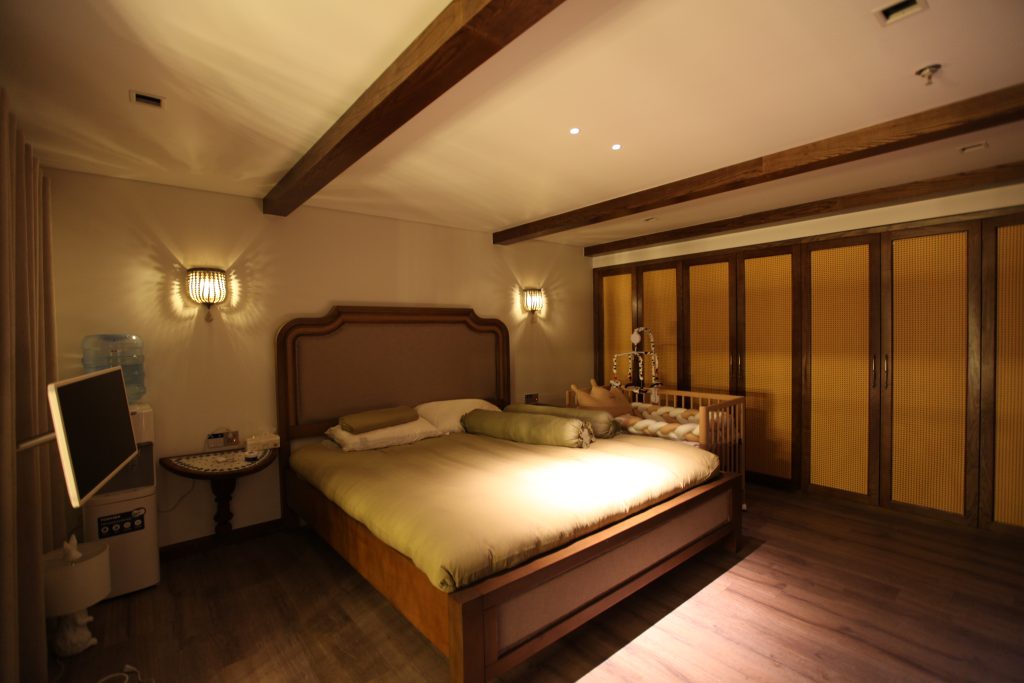


Gray Scale Levels are a critical parameter in LED lighting control technology, influencing both the resolution and the dimming capabilities of a system. What exactly are Gray Scale Levels, and how do 8-bit and 16-bit systems differ? Join LTECH as we explore the operating principles, practical applications, and how to select the appropriate specifications to optimize lighting performance.
1. What are Gray Scale Levels?
Gray Scale Levels refer to the number of distinct values used to represent light intensity within a digital system. This concept is applied in image processing, digital displays, and LED lighting control.
In digital imaging, a gray scale describes a range from black to white, encompassing various intermediate shades. In LED control systems, Gray Scale Levels typically denote the number of control values that can be represented.
Simply put, a system with a higher number of control levels offers a finer granularity in adjusting output values. However, a higher number of levels does not necessarily mean that the human eye can perceive a difference between every single step.
Learn more about CRI here.
2. How Gray Scale Levels Work
In digital systems, values are represented using bits. Each bit can exist in one of two states: 0 or 1.
The total number of representable values is calculated using the following formula:
N = 2^n
Where:
N is the number of representable values.
n is the number of bits used.
For example, an 8-bit system can represent 256 distinct values, while a 16-bit system can represent 65,536 distinct values. In LED control, these values can be used to set the output level of a controller. Depending on the configuration, the control value is converted into a signal used to adjust the brightness of the light.
3. Common Gray Scale Levels
Gray Scale Levels are typically distinguished based on the number of bits used to represent a value. A higher number of bits allows for a greater number of representable value levels.
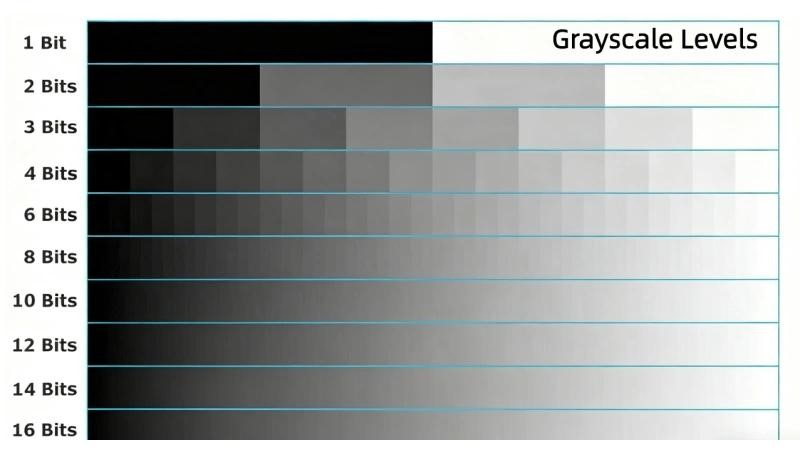
3.1. 1-bit Gray Scale
The 1-bit mode consists of 2 value levels. In a monochrome image, these two levels typically correspond to black and white. This is a simple representation with few intermediate shades; therefore, 1-bit is unsuitable when detailed transitions in brightness are required.
3.2. 8-bit Gray Scale
The 8-bit mode consists of 256 value levels, ranging from 0 to 255. In a grayscale image, a value of 0 typically represents black, while 255 represents white. In LED control, 8-bit provides 256 control values for each supported channel. This is a common resolution used in many digital systems.
3.3. 16-bit Gray Scale
The 16-bit mode consists of 65,536 value levels, ranging from 0 to 65,535. This larger number of levels allows the system to divide the value range into much smaller increments. In lighting control applications, this mode is ideal when high control resolution is required. However, the hardware must support 16-bit mode to fully utilize this capability.
3.4. Comparison Table of Gray Scale Levels
| Resolution | Resolution | Resolution |
| 1-bit | 2 | 0 to 1 |
| 8-bit | 256 | 0 to 255 |
| 10-bit | 1.024 | 0 to 1.023 |
| 12-bit | 4.096 | 0 to 4.095 |
| 16-bit | 65.536 | 0 to 65.535 |
These levels are calculated using the formula $2^n$. This represents the number of representable values, not necessarily the number of brightness levels that the human eye can reliably distinguish.
4. How do Gray Scale Levels affect LED lighting control?
In lighting systems, Gray Scale Levels relate to the resolution of the control signal. This parameter influences how the system transitions between different brightness output values.
4.1. Brightness adjustment capability
When adjusting LED brightness, the controller must transition from one value to another. A higher resolution allows the system to utilize a greater number of intermediate values. This is particularly useful when designing lighting scenarios that require gradual transitions—for instance, in living rooms, hotels, restaurants, and showrooms.
4.2. Smoothness of dimming
Dimming is the process of adjusting the brightness of a light source to suit specific requirements. High control resolution enables finer, more granular steps during brightness transitions.
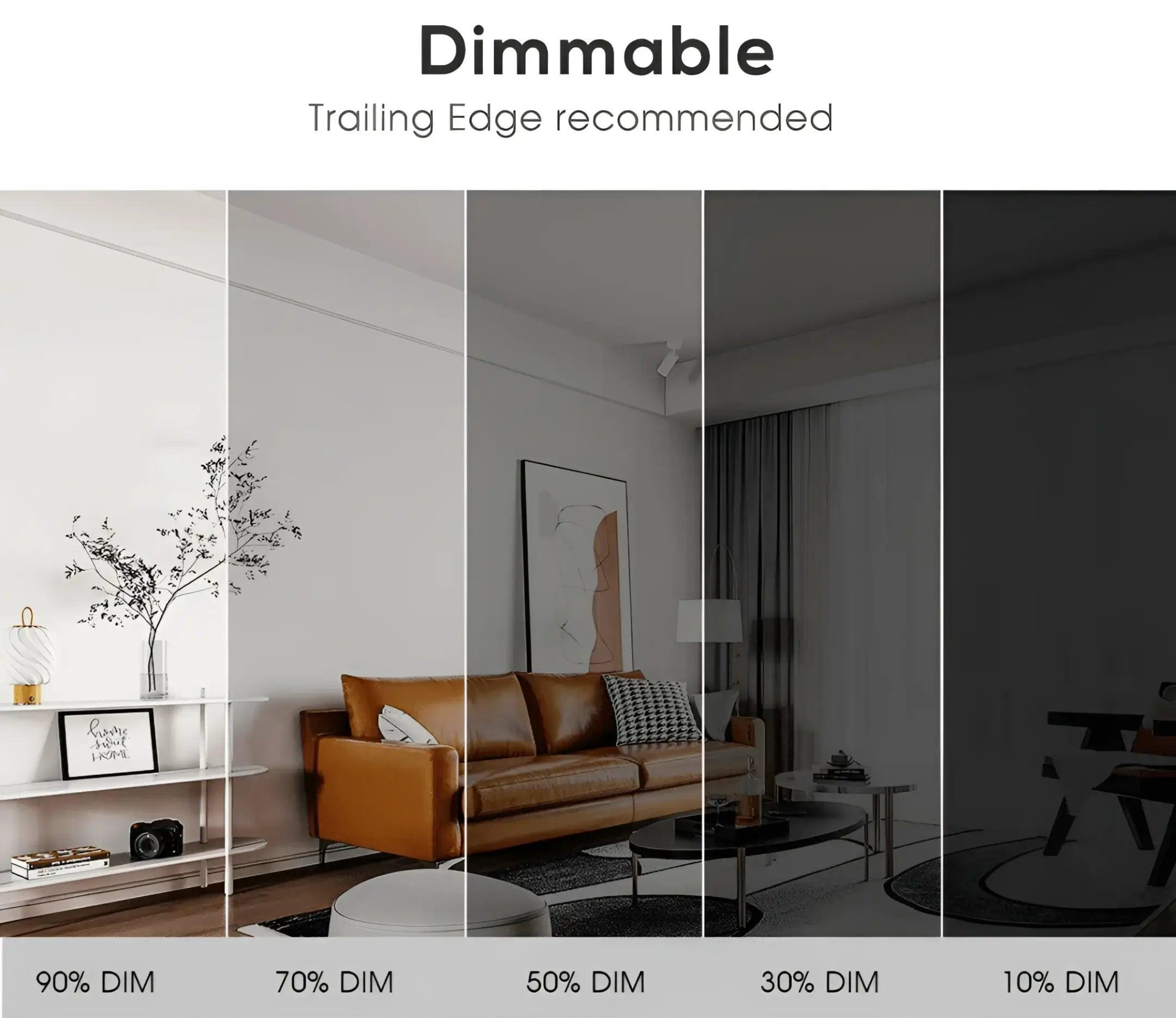
However, Gray Scale Levels are not the only factor that determines smoothness. The dimming curve, LED driver, and control algorithms also influence the actual outcome.
4.3. Color Light Control Capability
In RGB or RGBW systems, the controller uses color channels to produce various colors. Each channel may have its own specific control resolution. Higher resolution provides more value levels for adjusting each individual channel, allowing for more precise control over colors and lighting effects—provided that the entire system is compatible.
5. Distinguishing Between Gray Scale Levels and PWM Frequency
While both Gray Scale Levels and PWM Frequency relate to LED control, they represent different characteristics. Gray Scale Levels refer to the number of distinct values a system can represent, whereas PWM Frequency is the frequency of the Pulse Width Modulation signal, typically measured in Hz or kHz.
PWM regulates the average power supplied to an LED by varying the ratio of “on” time to “off” time within the signal. The PWM frequency indicates how many cycles the signal completes in one second.
| Criteria | Gray Scale Levels | PWM Frequency |
| Meaning | Number of control value levels | The PWM signal frequency |
| Unit | Bit count/number of levels | Hz or kHz |
| Unit | Determines control resolution | Determine the repetition rate of the PWM cycle |
| Influence | The ability to subdivide control steps | May affect flickering and recording capability |
A high PWM frequency can help reduce flickering under certain conditions. However, its effectiveness depends on the driver, dimming configuration, and recording equipment. Therefore, “Gray Scale Levels” should not be used as a substitute for “PWM Frequency” when evaluating LED controllers.
6. How to Select Appropriate Gray Scale Levels
When choosing lighting control equipment, decisions should be based on the project’s technical requirements rather than simply comparing bit depths.
6.1. Define the Intended Use
For basic lighting systems, 8-bit resolution is often sufficient for most control needs. For projects requiring nuanced lighting effects, 16-bit resolution may be considered, provided the equipment supports it.
6.2. Verify Compatibility
Controllers, decoders, and signal transmission protocols must all support the corresponding Gray Scale Levels. In the case of DMX512, it is essential to verify how the equipment processes 8-bit versus 16-bit data.
6.3. Evaluate Actual Dimming Quality
It is advisable to test the lights at various brightness levels, particularly at low-intensity settings. If the project involves the use of cameras, the system should also be evaluated for potential flickering during recording.
Additionally, consider the dimming curve and the adjustability of the driver—both are critical factors in ensuring the system meets the specific operational requirements.
Learn more about DMX-based projects implemented by Zegal here.
7. Introduction to LTECH Lighting Control Solutions
LTECH is a brand that provides smart lighting control solutions for a wide range of residential and professional applications. Their product portfolio includes LED controllers, DMX512/RDM decoders, and tailored dimming solutions designed to meet diverse requirements.
8. Conclusion
Gray Scale Levels represent the number of distinct values that can be expressed within a digital system. In the context of LED control, this parameter relates to the resolution of the light-dimming process.
An 8-bit mode offers 256 levels, while a 16-bit mode provides 65,536 levels. The choice should be based on specific control requirements, system compatibility, and the desired quality of the dimming effect.
A clear understanding of Gray Scale Levels enables users to accurately interpret technical specifications, ensuring that the selected lighting control system is well-aligned with the objectives of each individual project.
——
For further consultation, please contact Zegal Vietnam using the information below:
Zegal Hanoi
112 Vo Chi Cong, Tay Ho District, Hanoi
Zegal Ho Chi Minh City
319 – C9 Ly Thuong Kiet, Phu Tho Ward, Ho Chi Minh City
Hotline: 0969 14 6688