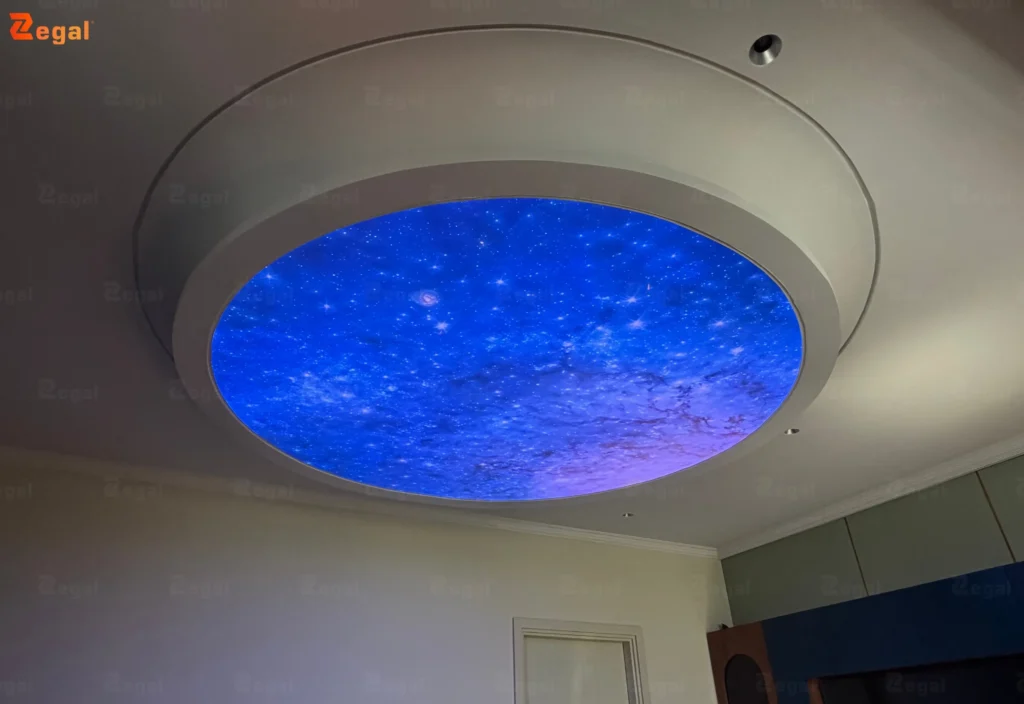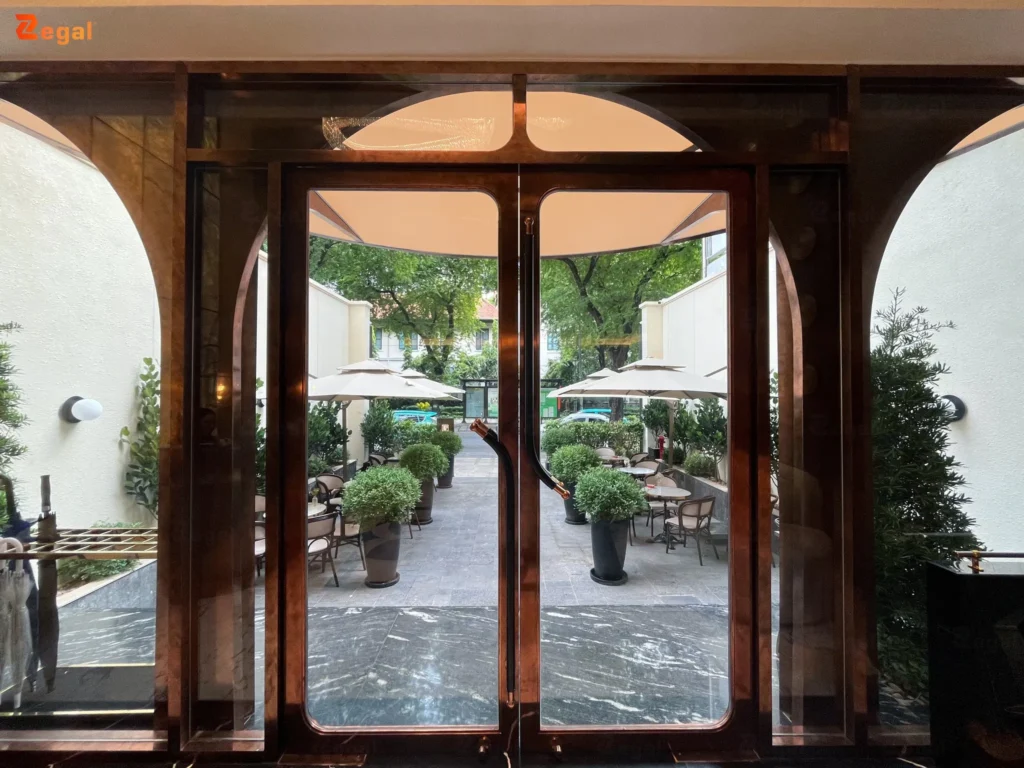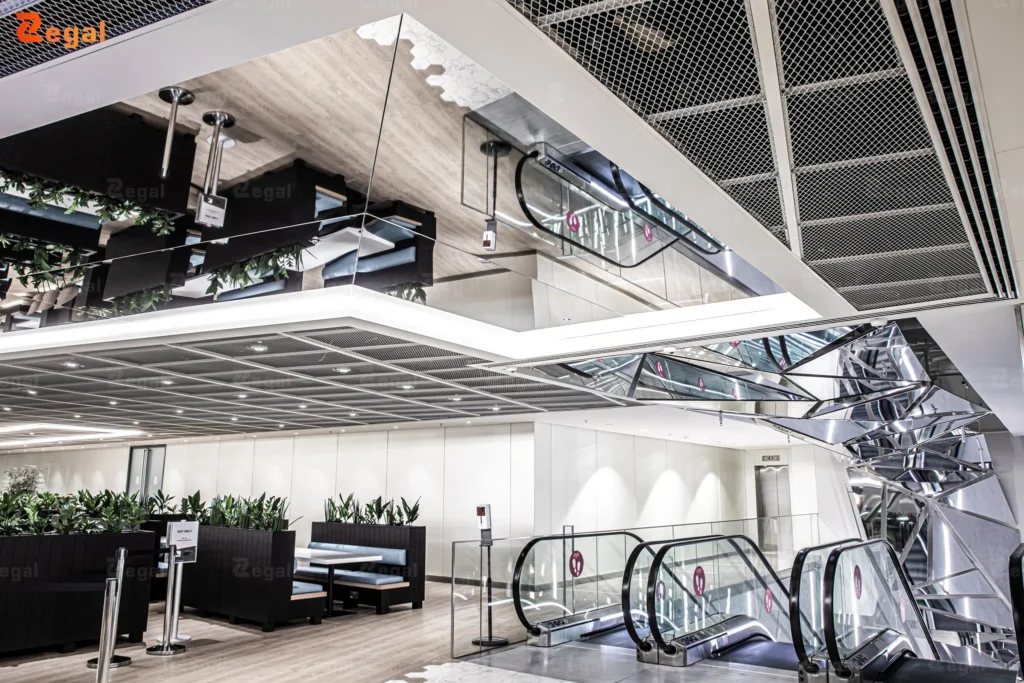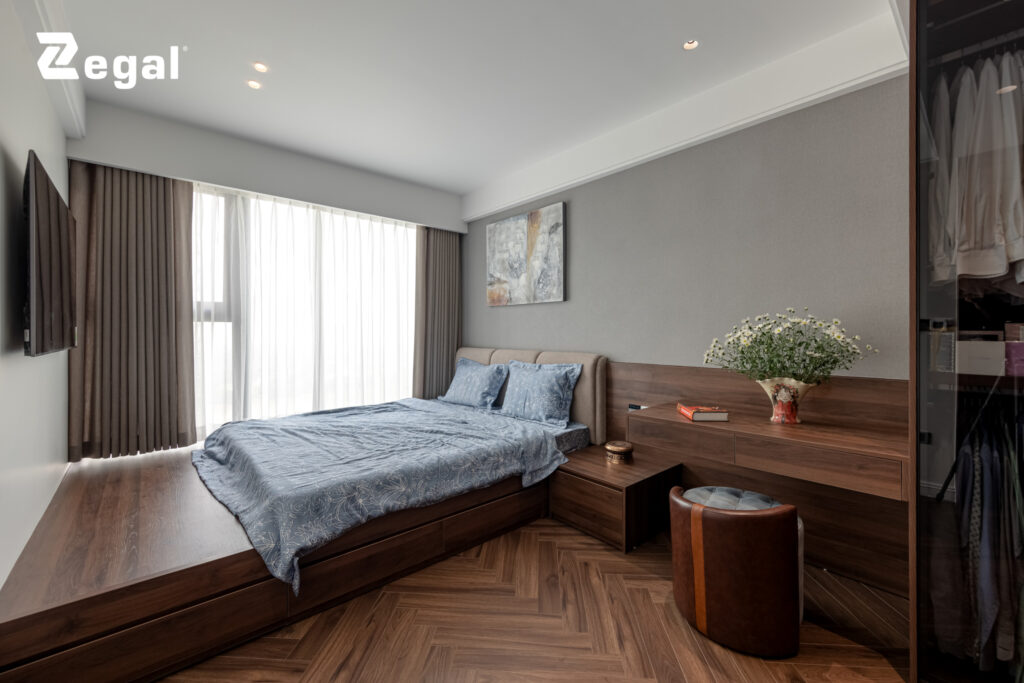


A glossy ceiling is not just an aesthetic choice, but also a solution for spatial treatment through light and reflection. With a high reflective surface, a glossy stretch ceiling creates the illusion of a higher ceiling, a wider space, and better light diffusion compared to traditional ceilings.
In modern interior design, which increasingly emphasizes visual experience and lighting efficiency, this ceiling system is becoming a strategic architectural element, rather than just a surface finish.
1. What is a Glossy Ceiling?
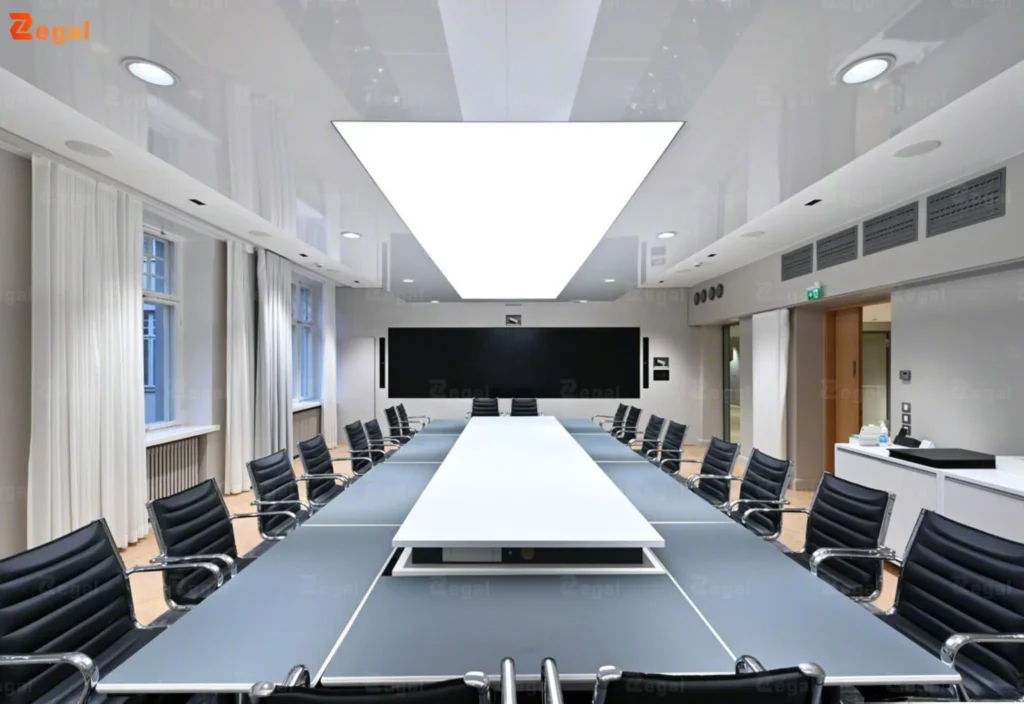
A glossy ceiling is a ceiling with a high-reflective surface, creating a mirror or semi-mirror effect. This surface has the ability to reflect light, shapes, and movement within a space, thereby enhancing visual depth.
Unlike matte ceilings or conventional painted ceilings, this system does not absorb light but “doubles” the light within the space. This is why glossy stretch ceilings are often used in spaces that need a sense of spaciousness, height, or luxury.
2. Principle of Operation of Glossy Ceilings in Spaces
2.1 Light Reflection and Visual Expansion
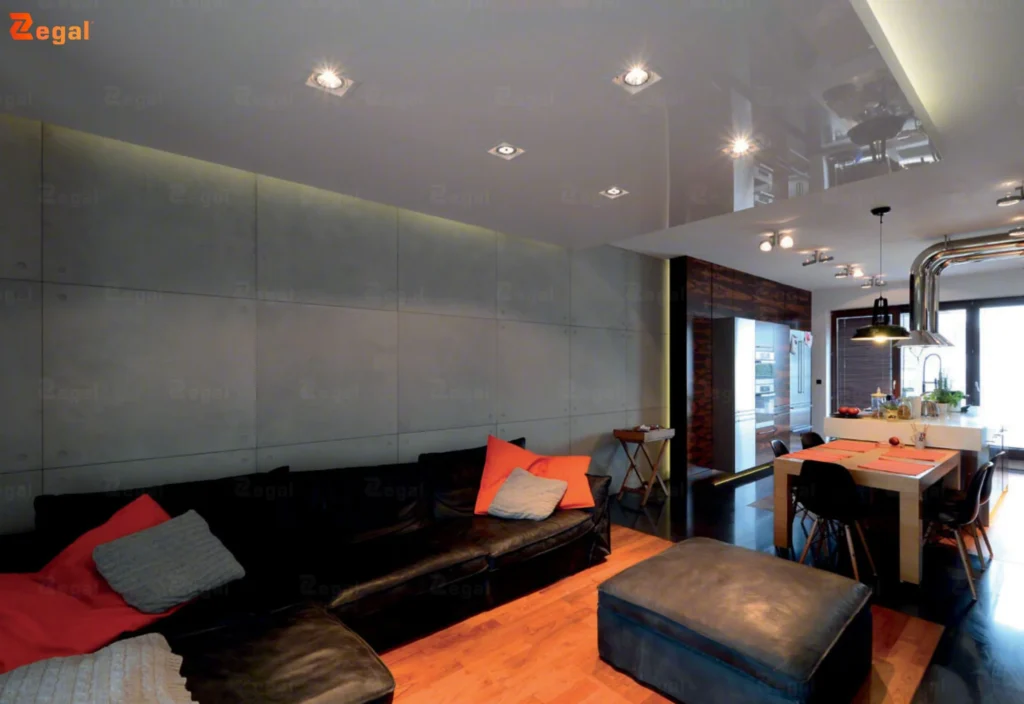
The core principle of glossy stretch ceilings lies in their ability to reflect light. When light is projected onto the reflective surface, instead of scattering or being absorbed, the light is reflected back into the space.
This helps:
- Increase overall brightness without the need for higher wattage lights
- Make the space appear taller than its actual height
- Reduce the heaviness of low ceilings
2.2 Creating a Secondary Layer of Space
The glossy ceiling surface creates a “virtual space layer” above the user’s head. Reflected images such as lights, furniture, or human movement give the impression of a deeper, more dynamic space.
In modern architecture, this technique is often used to enhance the visual experience without altering the structure.
3. Basic Structure of Glossy Stretch Ceilings
3.1 Surface Materials for Glossy Ceilings
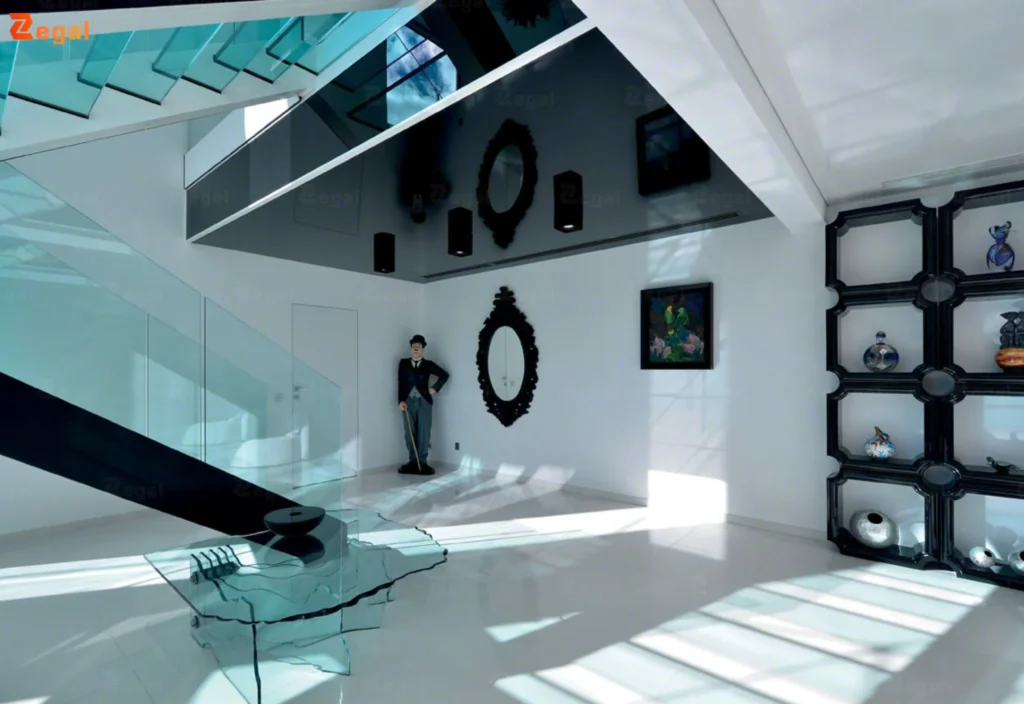
Each glossy ceiling material optimizes light reflection. The stretch film layer can be made from various materials, most commonly:
- Glossy PVC panels
- Glossy plastic or composite panels
- Reflective ceiling materials
Each type of material has different levels of reflectivity, durability, and installation requirements but all aim to create a surface that effectively reflects light.
3.2 Frame System and Ceiling Suspension Structure
Like other ceiling finishes, a glossy ceiling requires a solid framing system to ensure the surface remains flat. The flatness of the surface is very important because even a small deviation will distort the reflected image.
3.3 Accompanying Lighting System
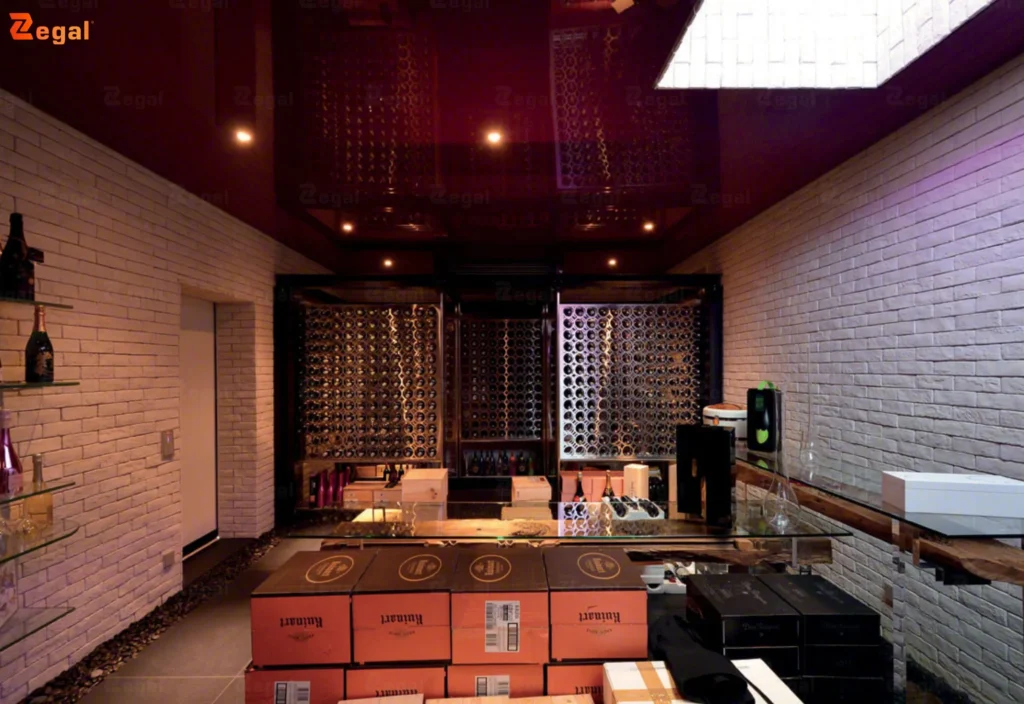
The reflective ceiling system does not operate independently of light. The aesthetic effect of the ceiling heavily depends on the placement of the lights beneath or around it. Incorrect light positioning or too intense a light source can cause glare or unwanted reflection.
4. Outstanding Advantages of Glossy Stretch Ceilings
4.1 Enhancing the Sense of Space and Height
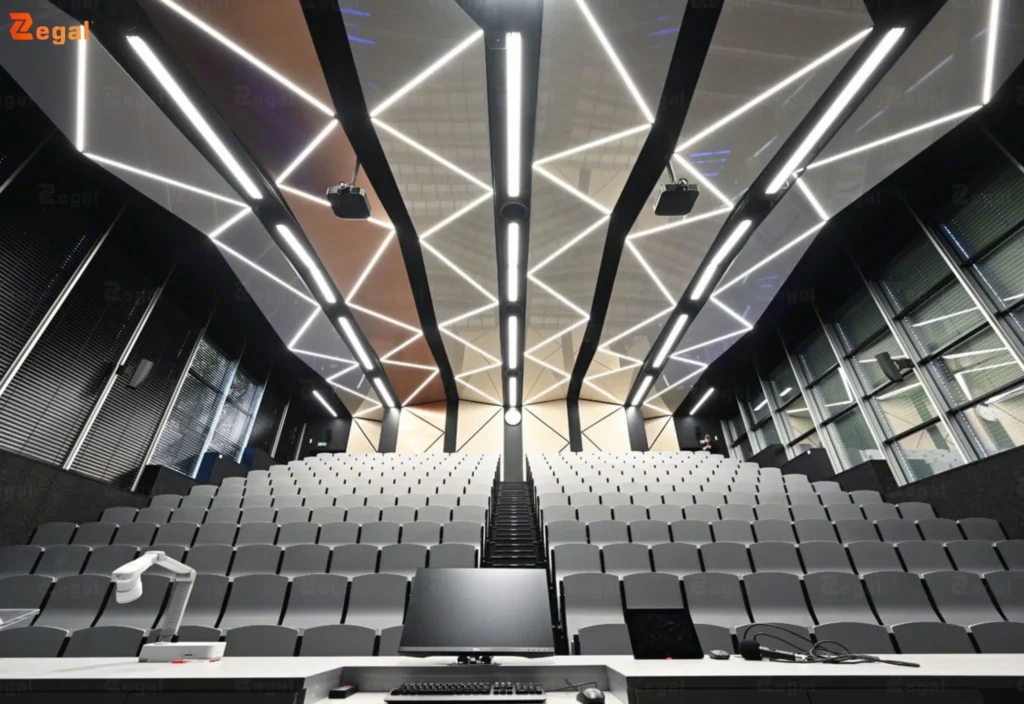
In spaces with limited height, glossy ceilings are an effective visual solution. The reflection from the ceiling surface gives the impression that the ceiling is “lifted” higher than its actual height.
4.2 Optimizing Lighting Efficiency
Due to their reflective properties, glossy stretch ceilings help light distribute more evenly throughout the space. This is especially useful in spaces that use indirect or decorative lighting.
4.3 Creating a Strong Aesthetic Focal Point
A glossy ceiling can capture attention immediately upon entering a space. The reflective effect adds a sense of luxury, modernity, and depth to the room.

4.5 Easy Integration with Various Interior Styles
From modern and minimalist styles to high-end commercial spaces, a glossy stretch ceiling can adapt to various designs if appropriately planned and illuminated.
5. Important Considerations When Designing and Installing Glossy Ceilings
5.1 Control Lighting to Avoid Glare
Due to the high reflective surface, when installing glossy ceilings, lighting must be calculated carefully. Lights with too direct an angle or high intensity can cause glare and discomfort.

5.2 Ensure Flatness and Quality of Installation
The glossy ceiling surface exposes any imperfections. Therefore, installation must be precise, with a solid frame and high-quality materials.
5.3 Consider the Functional Requirements of the Space
Not all spaces are suitable for reflective ceilings. Areas that require visual tranquility or soft lighting should be carefully considered before using highly reflective surfaces.

6. Conclusion
Glossy ceilings not only bring aesthetic value but also serve as an effective solution for expanding space and optimizing light. When designed and installed correctly, this reflective ceiling system becomes an important architectural element, enhancing the living and working experience.
——
For further consultation, please contact Zegal Vietnam using the information below:
Zegal Hanoi
112 Vo Chi Cong, Nghia Do Ward, Hanoi
Zegal Ho Chi Minh
319–C9 Ly Thuong Kiet, Phu Tho Ward, Ho Chi Minh City
Hotline: +84969 14 6688