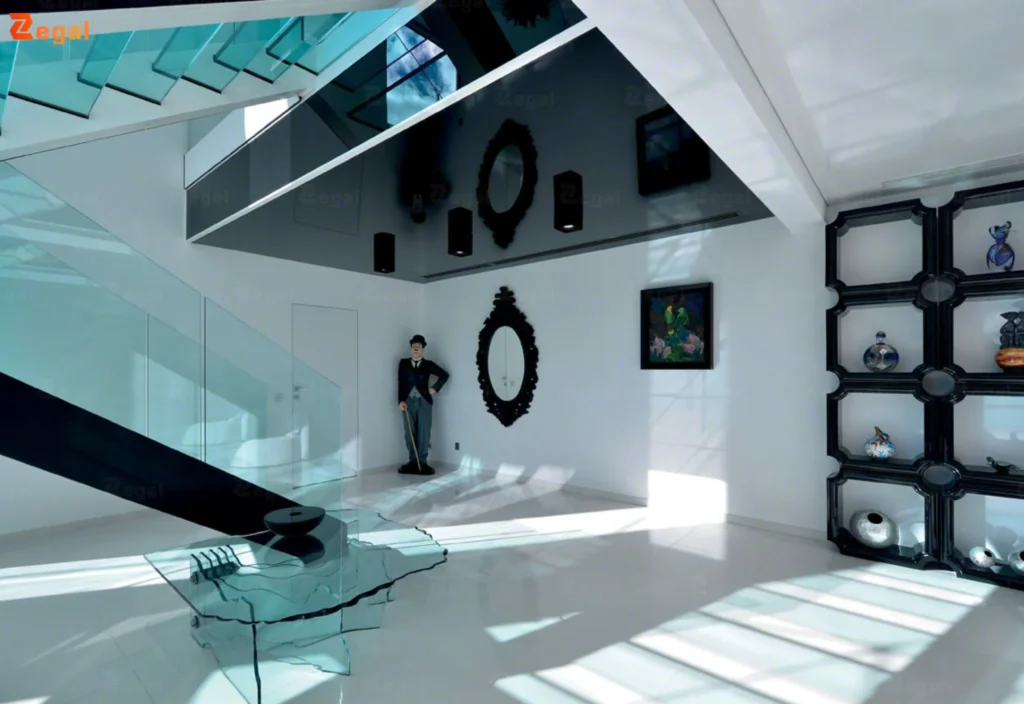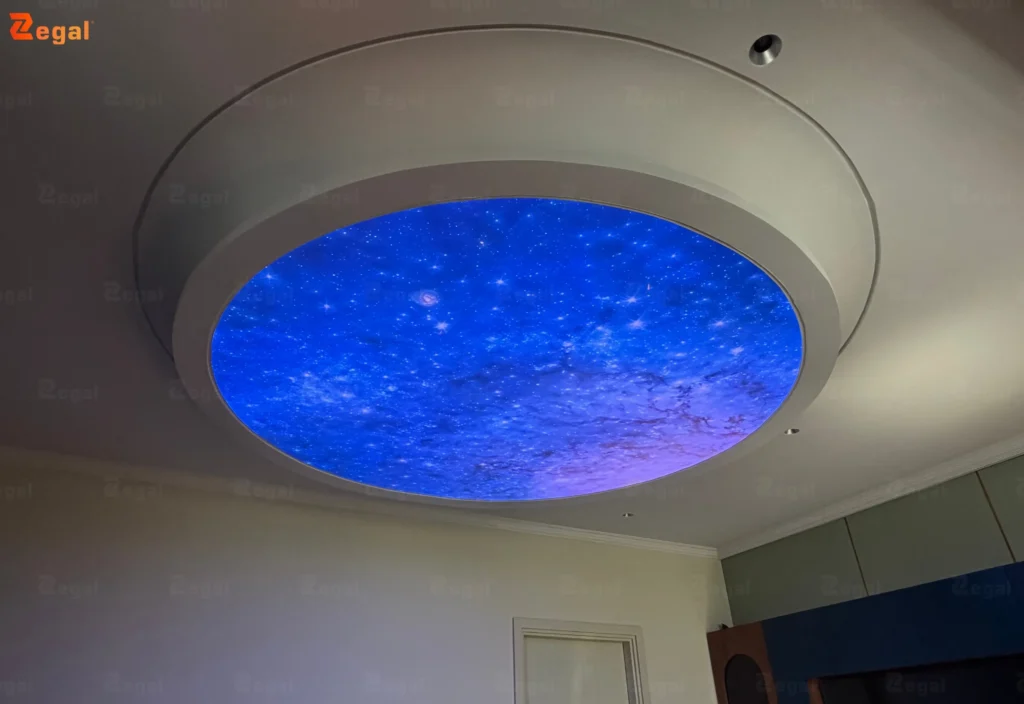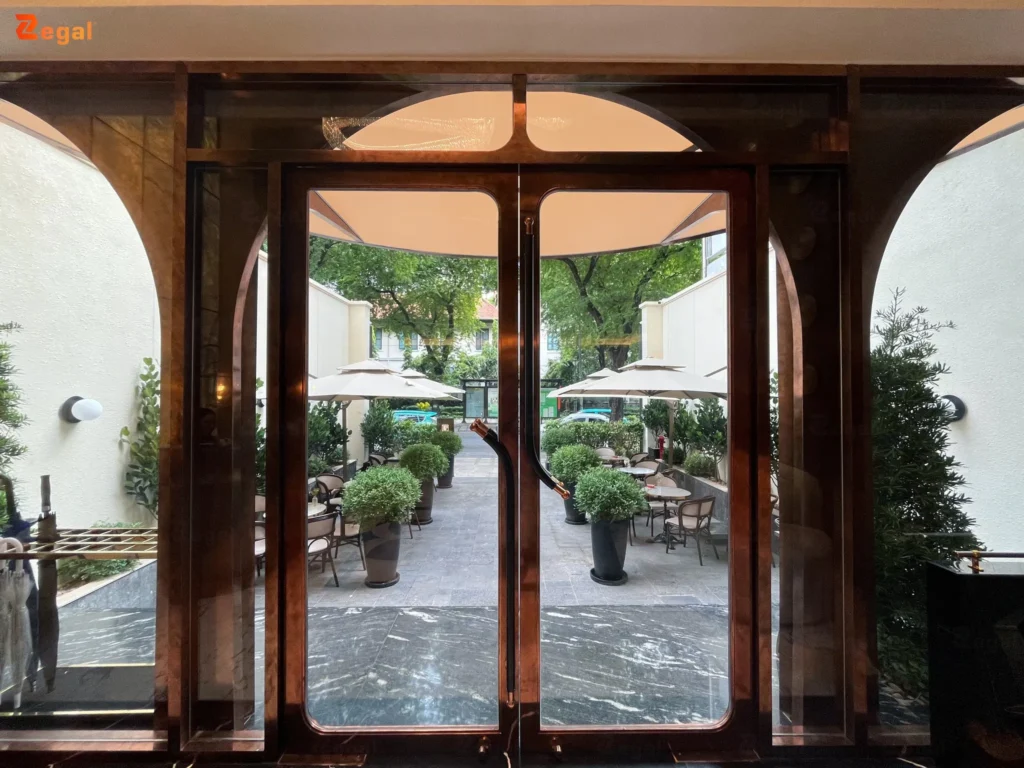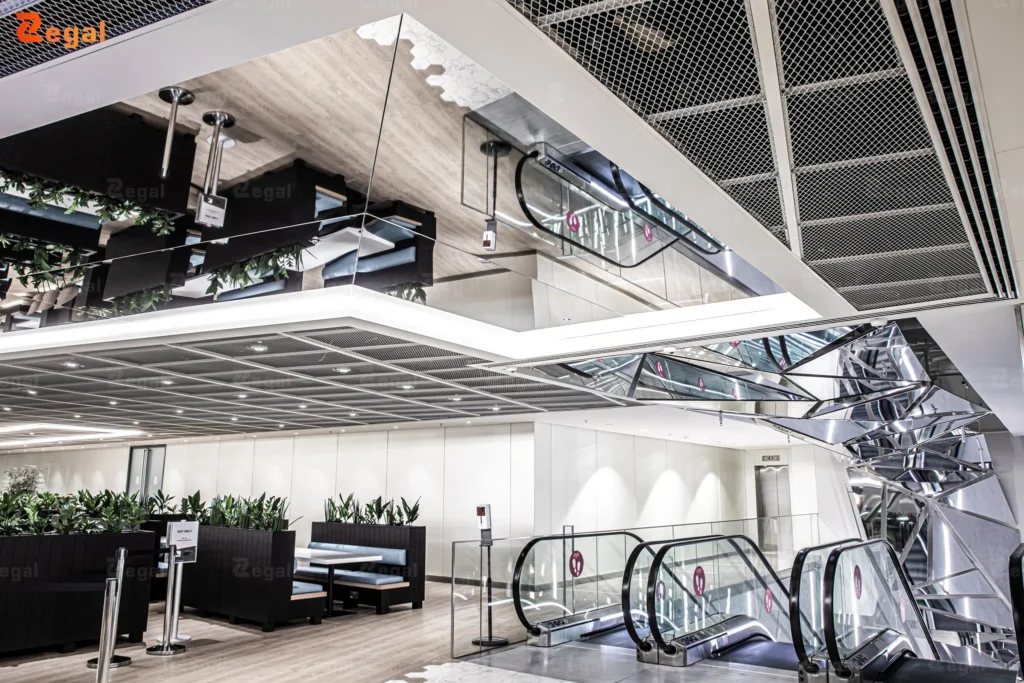


Color-changing translucent ceilings are among the most powerful lighting solutions for redefining spatial experience today. Instead of relying on scattered light points, the entire ceiling surface becomes a living layer of light that can shift color according to time, emotion, or programmed scenarios.
1. What color-changing translucent ceilings are and why they are preferred
A color-changing translucent ceiling is a ceiling system that uses specialized diffusing membranes combined with color-changing LED technology to create a wide, even luminous surface with adjustable color tones. It is not merely a ceiling, but a flexible lighting layer that functions as an emotional surface for space.

While traditional gypsum ceilings primarily serve as concealment, translucent ceilings transform the entire ceiling plane into a light source. Light no longer comes from a single point, but from a clean, smooth, and uniform surface. As color tones shift, spatial perception changes accordingly, becoming softer, deeper, and more immersive.
2. Structure of a color-changing translucent ceiling
2.1 Translucent membrane
The translucent membrane is made of PVC and stretched over an aluminum frame to form a seamless plane. Its optical clarity directly affects light smoothness. As light passes through the membrane, it is evenly diffused, preventing visible LED points.

These ceiling systems resist staining, tearing, heat, and color degradation over time. This is why translucent membranes are commonly prioritized in hotel and showroom projects.
2.2 Aluminum framing system
The frame is fabricated according to detailed technical drawings and precisely finished. It can be curved, rounded, or formed into three-dimensional shapes. The frame maintains membrane tension, secures the LED system, and ensures overall ceiling flatness.
2.3 Color-changing LED system
For color-changing translucent ceilings, RGB or RGBW LED systems are installed with calculated spacing. Light uniformity depends on:
- LED chip quality
- LED density
- V
- Distance between LEDs and membrane

Color-changing LEDs allow a wide range of tones, from pure white to warm, cool, or expressive colors. With DMX control, transitions are fluid and stable, meeting the requirements of projects with high lighting standards.
2.4 Control system
Color-changing translucent ceilings can be controlled via:
- Smart switches
- Remote
- Smarthome applications
- DMX systems for professional lighting effects
With DMX operation, the entire ceiling surface can shift from subtle to dynamic within seconds, creating an effect similar to a large-scale light display.
3. Advantages of color-changing translucent ceilings and why they are used in high-end spaces
3.1 Changing spatial mood through light alone

Architectural layouts and interiors cannot always be altered, but light can change instantly. Color-changing translucent ceilings enable users to create atmospheres such as:
- Warm and welcoming for hosting guests
- Cool and neutral for focus
- Vivid and expressive for events
Spaces therefore become more dynamic and emotionally layered.
3.2 Enhancing visual depth and spatial openness
A wide luminous surface makes ceilings feel higher. Even light distribution reduces shadows and creates softness. This is why architects often specify translucent ceilings in spas, hotels, resorts, and high-end residences.
3.3 Seamless and refined aesthetics

Color-changing translucent ceilings create a no visible light source effect. All technical elements are concealed. The surface remains smooth, continuous, and cloud-like in appearance.
3.4 High durability and stable operation
Translucent membranes perform reliably across varying humidity levels. LEDs are energy efficient and long-lasting. Maintenance is minimal, limited mainly to surface cleaning when required.
3.5 Easy integration with smarthome systems
When connected to a smarthome ecosystem, users can:
- Change colors based on lifestyle scenarios
- Automate lighting via motion detection
- Schedule color transitions
- Synchronize lighting with audio systems or sensors
This transforms the translucent ceiling from a material element into an intelligent system component.

4. Zegal’s standard process for installing color-changing translucent ceilings
4.1 Site survey
Technical teams assess ceiling structure, cavity height, power supply locations, and cable routing strategies. This step is critical to avoid construction errors.
4.2 Technical lighting design
Zegal calculates:
- LED density
- LED-to-membrane distance
- Driver placement
- Power requirements and control solutions
- Connection points and cable routes
The objective is smooth illumination without hotspots, dark zones, or visible LEDs.

4.3 Frame installation and LED setup
Frames are securely installed according to drawings. LEDs are positioned evenly and tested before membrane tensioning.
4.4 Membrane tensioning and lighting inspection
The membrane is tensioned using heat. Lighting is then tested across multiple brightness and color levels to ensure uniformity and smooth transitions.
5. Is a color-changing translucent ceiling right for your project
If you are seeking a solution that:
- Enhances lighting quality
- Improves spatial emotion
- Creates strong visual identity without extensive material changes
- Optimizes living or brand experience
Then a color-changing translucent ceiling is worth serious consideration. This is a form of generative lighting technology, not just illumination.

6. Conclusion
Color-changing translucent ceilings are emotionally rich, flexible, and highly effective lighting solutions for a wide range of spaces. With advanced structure and versatile transformation capabilities, they deliver both aesthetics and experience, aligning perfectly with contemporary architectural trends.
——
For further consultation, please contact Zegal Vietnam using the information below:
Zegal Hanoi
112 Vo Chi Cong, Nghia Do Ward, Hanoi
Zegal Ho Chi Minh
319–C9 Ly Thuong Kiet, Phu Tho Ward, Ho Chi Minh City
Hotline: +84969 14 6688