

Stretch ceilings are one of the most unique interior design solutions, offering a modern, luxurious, and sophisticated space. However, few people know that this product has a long and impressive development history. From initial ideas in the 20th century to today’s advanced technology, stretch ceilings have undergone numerous improvements to become a popular interior design trend worldwide. Let’s explore the history and development of stretch ceilings through this article.
1. The Origin of Stretch Ceilings
1.1. Where Did Stretch Ceilings Originate?
The concept of stretch ceilings began in the mid-20th century, when architects and interior designers in Europe sought new materials to diffuse light. They needed a solution that could create uniform lighting effects, providing a sense of sophistication and modernity.
- Origin in Europe:
In the 1960s, designers in France and Germany started experimenting with PVC, a durable and flexible material, to create stretch ceilings.

1.2. What Made the Initial Products Special?
Initially, stretch ceilings were mainly used in commercial spaces like shops and hotels. These first designs were simple but showed great potential in interior design, especially when combined with artificial lighting.
2. Initial Development Phase (1970–1980)
2.1. Popularity in Europe
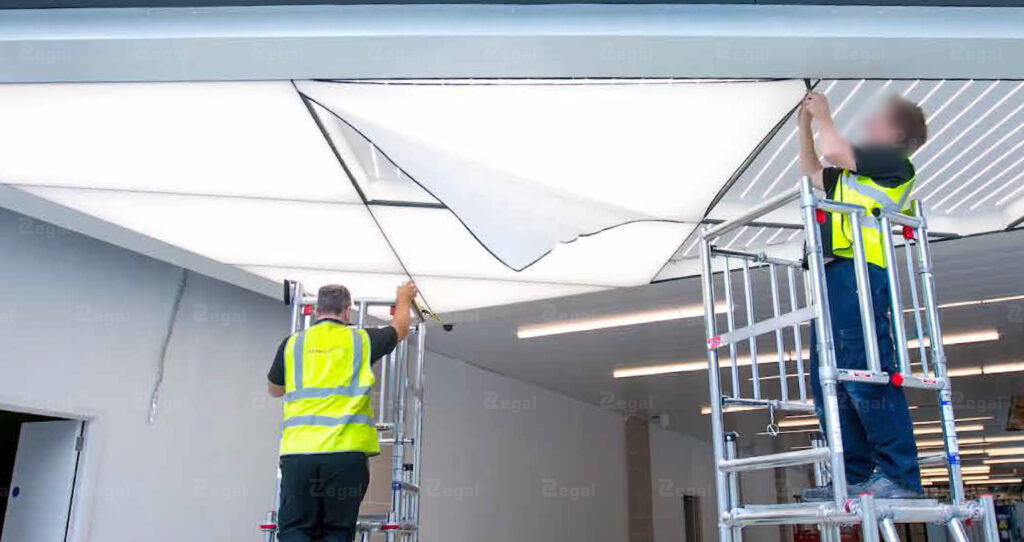
The 1970s marked the booming phase of stretch ceilings in Europe. Large interior design companies began mass-producing ceiling sheets with significant improvements in durability and fire resistance.
- Applications in Commerce:
Shopping malls, offices, and hotels quickly adopted stretch ceilings not only for their aesthetics but also for reducing dependency on natural light.

2.2. Materials and Manufacturing Technology
Improvements in PVC materials made the sheets more durable, easier to clean, and resistant to dust accumulation. These advancements also received safety certifications, expanding their applications beyond Europe.
3. The Boom Thanks to LED Technology (1980–1990)
3.1. LED – A Major Breakthrough for Stretch Ceilings
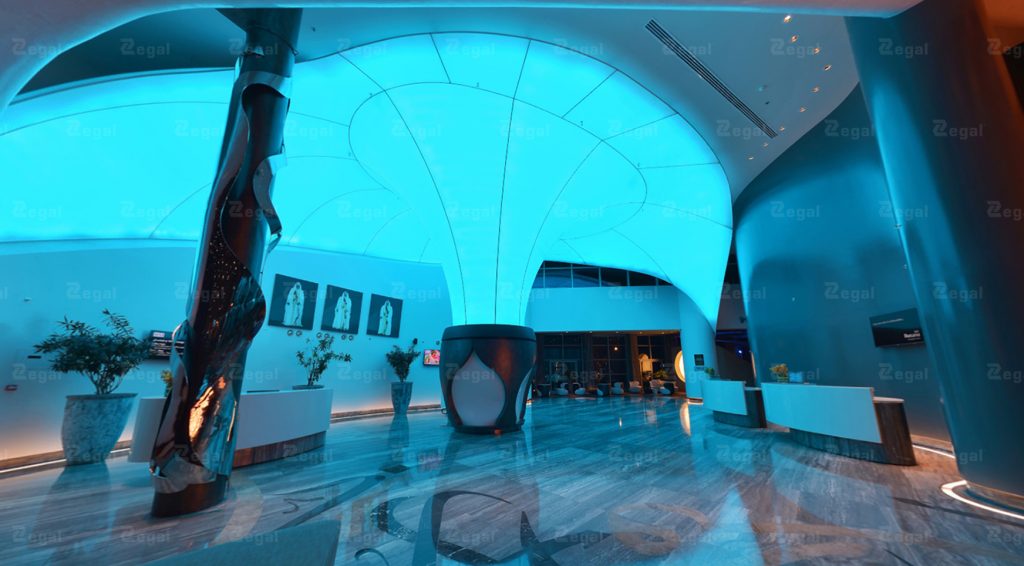
The advent of LED technology in the 1980s brought a significant turning point. LEDs not only saved energy but also created diverse lighting effects, making stretch ceilings even more outstanding.
- Advantages of LED:
- Gentle light without flicker.
- Adjustable brightness and colors.
- Long lifespan, suitable for ceiling designs.
3.2. Expansion to International Markets
Beyond Europe, stretch ceilings started spreading to Asian countries such as Japan and South Korea. Designs incorporating LED lighting helped increase their appeal to users.
4. Refinement Phase (2000–2010)
4.1. Breakthrough in Printing Technology
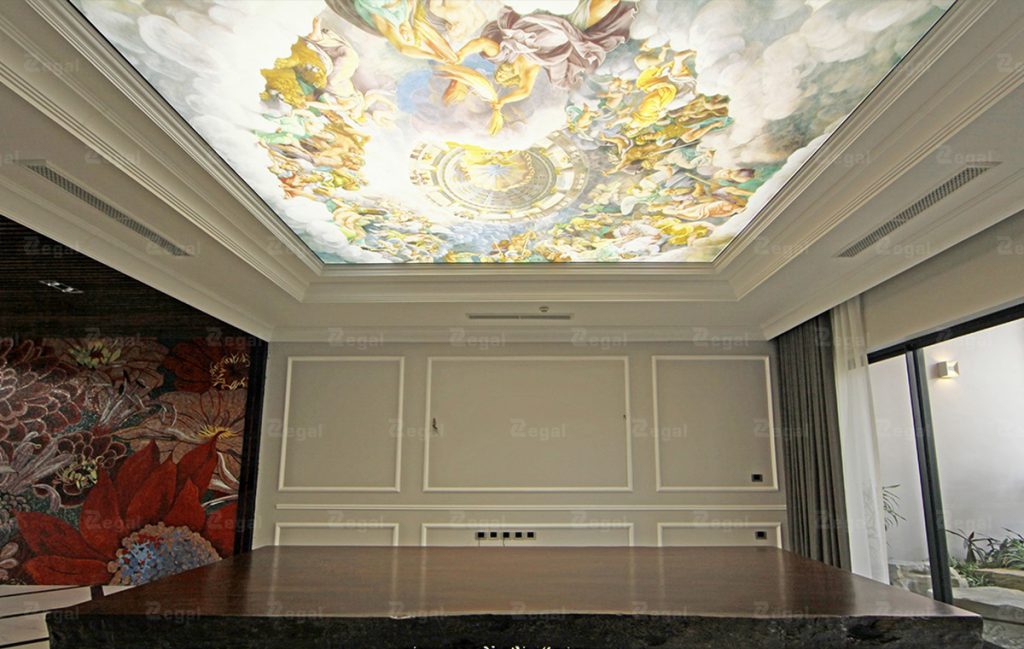
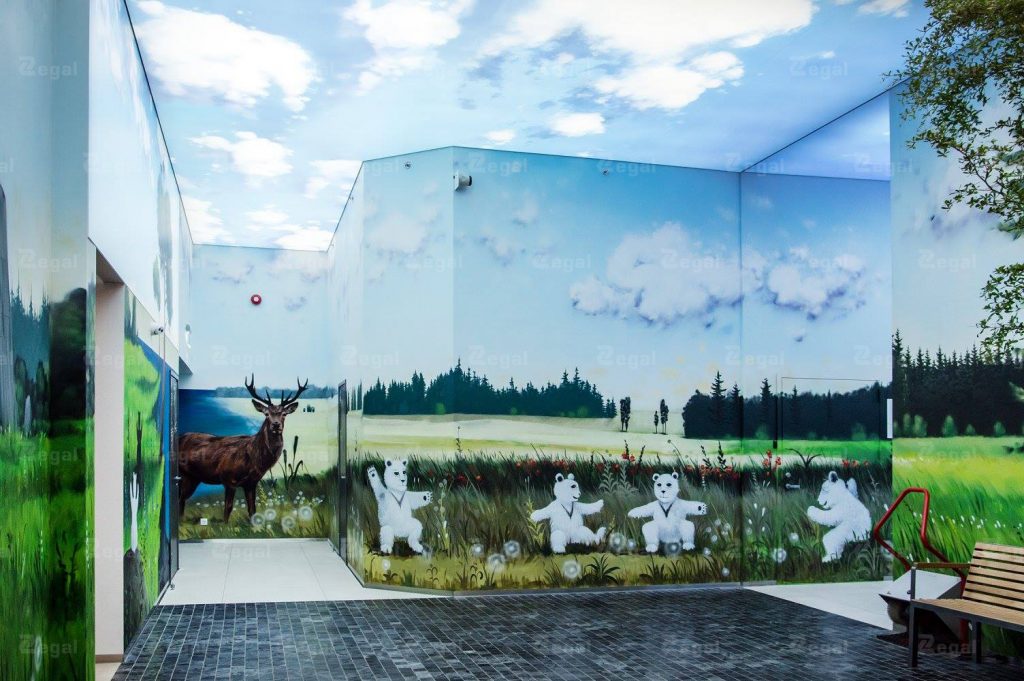
At the start of the 21st century, UV and 3D printing technologies were applied in the production of stretch ceilings, creating unique patterned ceiling sheets. Popular themes included:
- Images of blue skies and floating clouds.
- Cosmic and galaxy patterns.
- Traditional and modern decorative motifs.
4.2. Transition to Residential Use
Before 2000, stretch ceilings were primarily used in commercial projects. However, from 2005 onwards, they gradually penetrated residential spaces, being installed in:
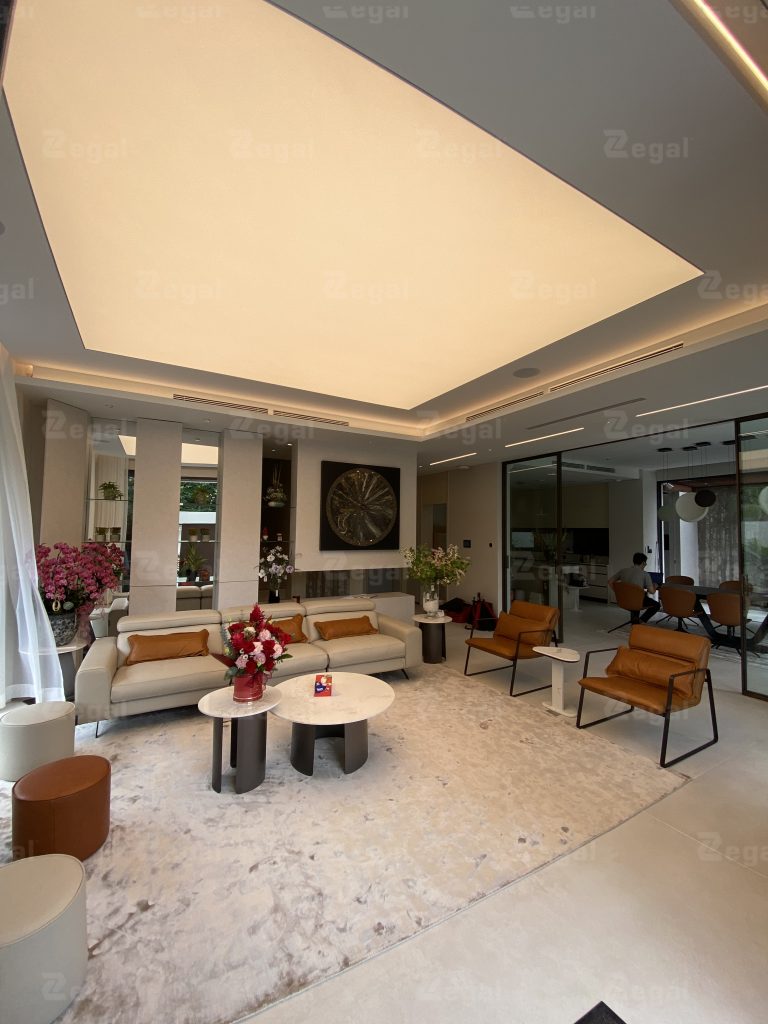
- Living rooms: Creating luxurious spaces.
- Bedrooms: Offering soft and relaxing lighting.
- Bathrooms: Enhancing aesthetics and durability in humid environment.
5. Modern Trends and the Future (2010 to Present)
5.1. Integration with Smart Technology
Modern stretch ceilings are not just decorative products but also integrate smart technologies. Notable features include:
- Adjusting lighting via voice commands or mobile apps.
- Motion sensors for automatic light on/off functions.
5.2. Applications in Green Architecture
With the green trend, stretch ceilings are used to save energy. Projects utilizing this type of ceiling optimize lighting while reducing carbon emissions during production.

5.3. Personalized Designs
Today, customers can request custom designs for stretch ceilings, from colors and images to lighting effects. This increases personalization and meets diverse demands.
6. The Impact of Stretch Ceilings in Interior Design
6.1. Aesthetic Impact
Stretch ceilings have ushered in a new era in interior design, creating spaces that are:
- Modern and sophisticated.
- Spacious and airy, thanks to soft lighting effects.

6.2. Positive Psychological Effects
The lighting from stretch ceilings is not only beautiful but also beneficial for mental health. Many studies indicate that soft lighting helps reduce stress and improve mood.
7. Conclusion
Stretch ceilings have an admirable development journey, from initial ideas in the 1960s to modern interior solutions today. With the integration of smart technologies, personalized designs, and environmentally friendly features, stretch ceilings promise to remain a leading interior design trend in the future.
For further consultation, please contact Zegal Vietnam using the information below:
Zegal Hanoi
112 Vo Chi Cong, Nghia Do Ward, Cau Giay District, Hanoi
Zegal Ho Chi Minh
319 – C9 Ly Thuong Kiet, Ward 15, District 11, Ho Chi Minh City
Hotline: +84969 14 6688