

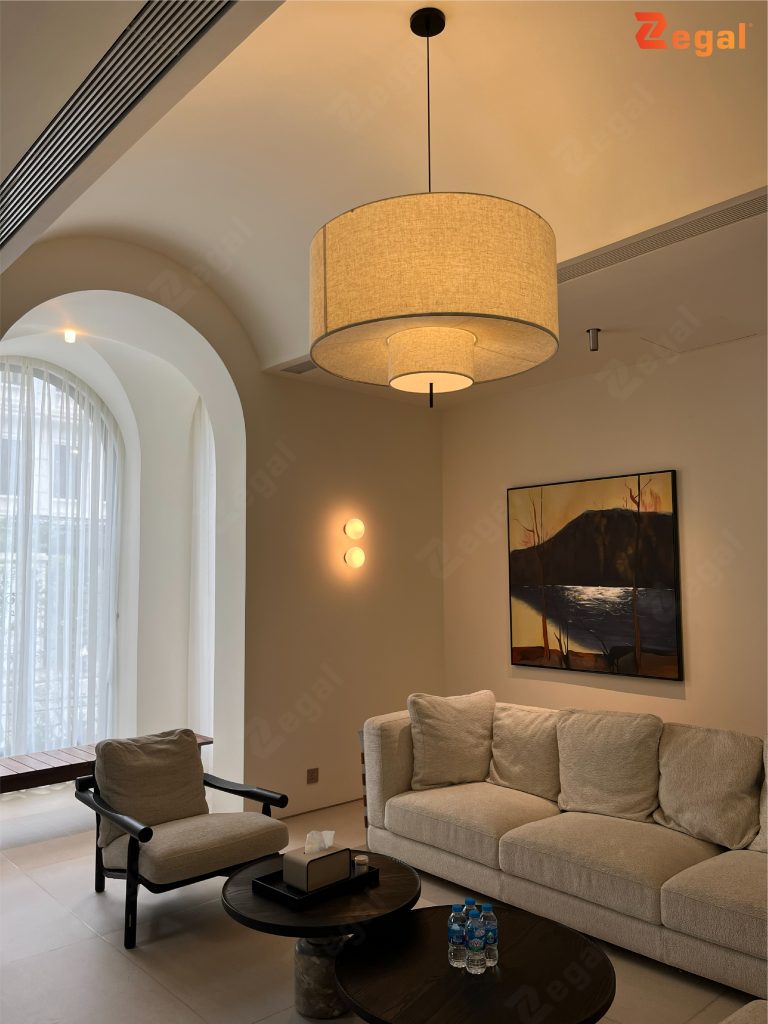
The Japandi style captivates many homeowners through its harmonious blend of the Scandinavian minimalist ethos and the rustic beauty of the Japanese *Wabi-sabi* philosophy. Japandi-inspired spaces typically prioritize natural materials, clean lines, neutral color palettes, and soft, gentle lighting. In this context, lighting serves not only a functional purpose but also contributes to a sense of relaxation and balance within the home.
To preserve this minimalist spirit while meeting the comfort requirements of modern living, LTECH’s smart lighting solutions have been integrated into the Ngoai Giao Doan project. Advanced light control technology, motion sensors, and intelligent control panels offer a flexible user experience, while the hardware itself is designed with a minimalist aesthetic to ensure it does not disrupt the overall architectural composition.
1. The Japandi Style and the Role of Lighting in Living Spaces
Japandi represents an intersection between the Scandinavian style of Northern Europe and Japanese aesthetic philosophy. While the Scandinavian approach emphasizes comfort, brightness, and a connection to nature, the *Wabi-sabi* spirit embraces simple, natural beauty—finding value in imperfection.
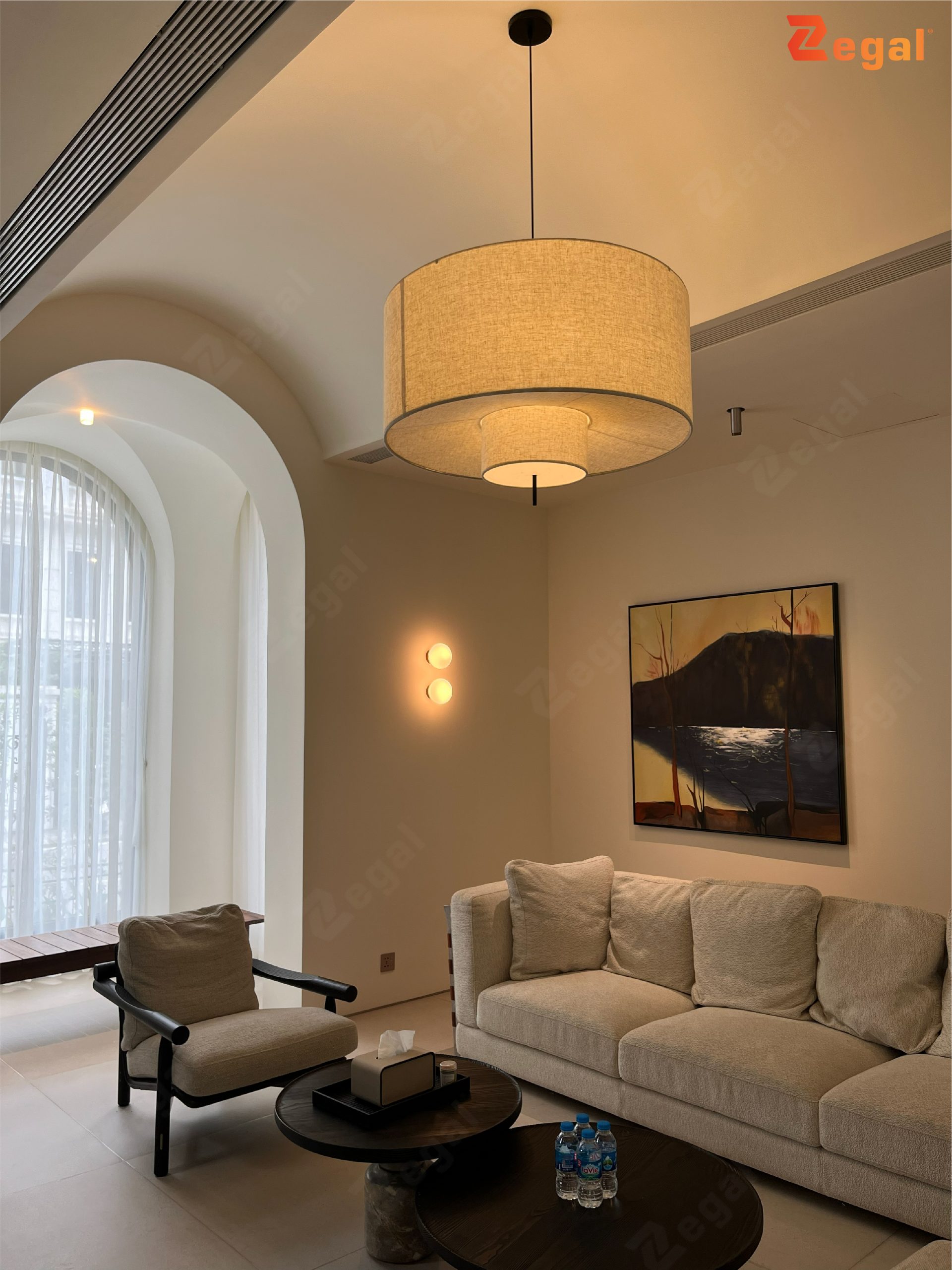
This combination creates living spaces defined by clean architectural lines, a restrained selection of furnishings, rustic materials, and a soft color palette. Consequently, lighting must be designed with clear intent—avoiding excessive brightness or any sense of ostentation.
In a Japandi-style home, lighting is typically layered to serve specific needs. Ambient (general) lighting ensures the space is well-lit and comfortable; task lighting supports activities such as reading, cooking, or working; and accent lighting highlights textures—from wood grains and wall surfaces to furniture and decorative details.
Beyond the physical placement of fixtures, the ability to adjust light intensity and color temperature is equally important. A smart lighting system allows the atmosphere to shift throughout the day, offering greater flexibility without the need for an abundance of control devices.
2. LTECH Smart Lighting: Streamlined Technology for the Japandi Home
In spaces that embrace minimalism, technology must be integrated subtly—enhancing convenience without introducing unnecessary complexity. LTECH’s smart lighting solutions address this by offering seamless connectivity, intuitive control, and automated management of the lighting system.
2.1. Flexible Bluetooth 5.0 SIG Mesh Connectivity
Bluetooth 5.0 SIG Mesh technology enables compatible devices to connect in a mesh network, facilitating the transmission and reception of control commands across the entire system. This allows users to manage multiple lighting zones throughout the home with great flexibility.
Instead of controlling each light individually, the system can be organized into groups or functional zones. Users can easily adjust the lighting in the living room, bedrooms, hallways, or common areas to suit their specific needs.
This organizational approach is particularly well-suited for Japandi-style homes, where seamlessness and tidiness are prioritized—both in interior design and the overall living experience.
2.2. Motion Sensors for Automatic Lighting Control
Motion sensors allow the lighting system to respond to the actual activity of the occupants. When movement is detected within the sensor’s range, the lights can turn on automatically; conversely, if no activity is detected for a set period, the system can automatically switch them off.
This solution is highly effective in areas such as hallways, corridors, transitional spaces between rooms, or any location with frequent foot traffic. Lighting is activated precisely when needed, reducing the need for manual switching and promoting more efficient energy consumption.
Furthermore, by minimizing the need for manual control, the system creates a more natural and seamless living experience.
2.3. TPWM Dimming Technology for a Smooth Experience
In a Japandi-style space, lighting does not need to remain at a fixed intensity. Depending on the time of day or the activity at hand, users may require brighter light for tasks like working or reading, or softer, gentler illumination for moments of rest. LTECH’s proprietary DIM TPWM technology enables smooth dimming, preventing abrupt shifts in light intensity. Furthermore, adjustable color temperature allows users to flexibly tailor the lighting tone to suit their specific needs and desired atmosphere.
With this level of light control, a single space can transition between various functional modes without requiring any changes to the interior layout or the lighting infrastructure itself.
2.4. Smart control panels as a replacement for traditional mechanical switches
A hallmark of the Japandi design aesthetic is the elimination of unnecessary details, ensuring that wall surfaces and interior spaces remain clean and uncluttered. By incorporating LTECH smart control panels, the need for a multitude of traditional mechanical switches is reduced, consolidating control functions into a single, intuitive interface.
Depending on the system configuration, users can manage various lighting functions from one device. This shift represents more than just a technological upgrade; it fosters a user experience that aligns perfectly with the minimalist ethos of Japandi architecture.
3. The Ngoai Giao Doan Project: Technology seamlessly integrated into Japandi design
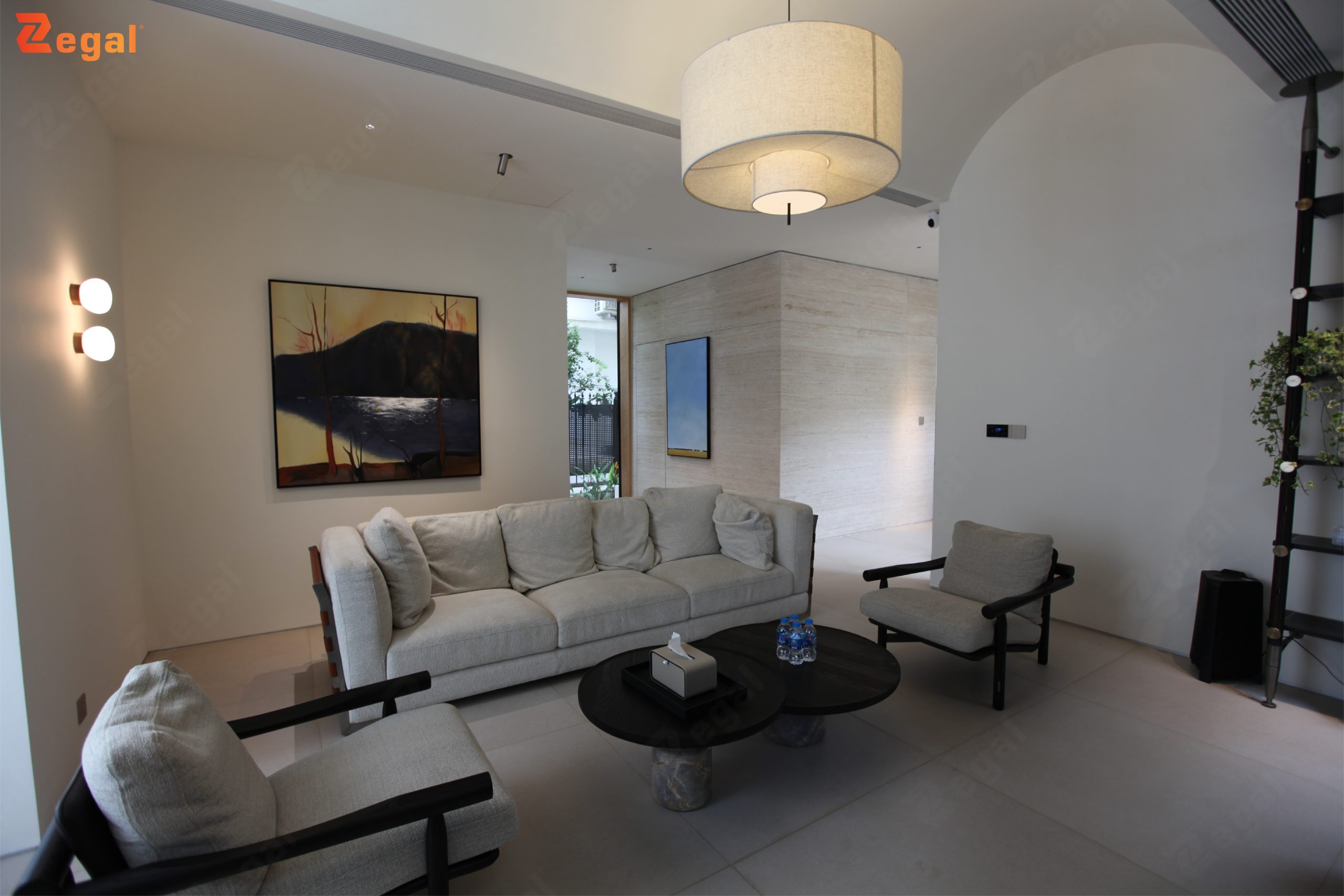
In the Ngoai Giao Doan project, the Japandi design language is expressed through a fusion of the refined, clean lines of Scandinavian style and the serene, rustic beauty of the Japanese *Wabi-sabi* philosophy.
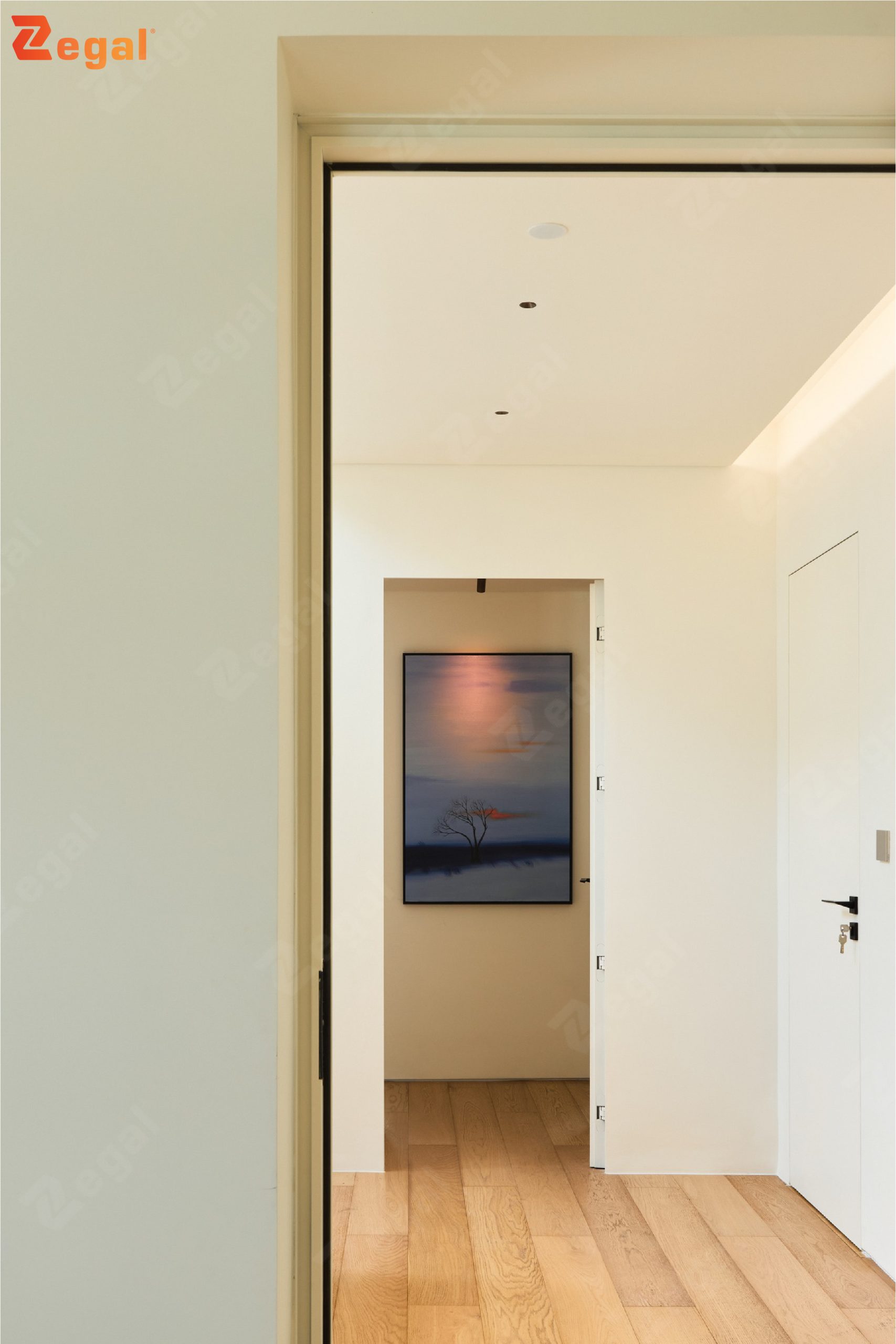
Within this overall framework, the LTECH smart home solution is integrated to enhance convenience while preserving the space’s inherent tranquility and simplicity. The Bluetooth 5.0 SIG Mesh smart lighting system facilitates the connection and control of lighting fixtures; motion sensors automatically toggle lights based on activity, while TPWM dimming technology enables smooth brightness adjustments and flexible color temperature control.
Notably, smart control panels replace numerous traditional mechanical switches, streamlining the control system and minimizing the presence of technical hardware on interior surfaces.
This project demonstrates that technology need not serve as a dominant visual feature in architecture. When carefully selected and integrated, technology can exist discreetly—enhancing living comfort while remaining true to the original design intent.
4. LTECH – Smart Lighting Solutions for Modern Spaces
In contemporary architecture, lighting systems must be evaluated through the lenses of aesthetics, functionality, and controllability. For styles that prioritize minimalism—such as Japandi—selecting the right technology helps reduce the need for manual operation, keeping the space uncluttered.
By leveraging Bluetooth 5.0 SIG Mesh connectivity, motion sensors, TPWM dimming technology, and smart control panels, LTECH offers flexible lighting management for modern living environments.
The Ngoai Giao Doan project serves as an example of how smart lighting technology can be harmoniously integrated into architecture, elevating convenience while safeguarding a minimalist aesthetic. ——
For further consultation, please contact Zegal Vietnam using the information below:
Zegal Hanoi
112 Vo Chi Cong, Tay Ho District, Hanoi
Zegal Ho Chi Minh City
319 – C9 Ly Thuong Kiet, Phu Tho Ward, Ho Chi Minh City
Hotline: 0969 14 6688