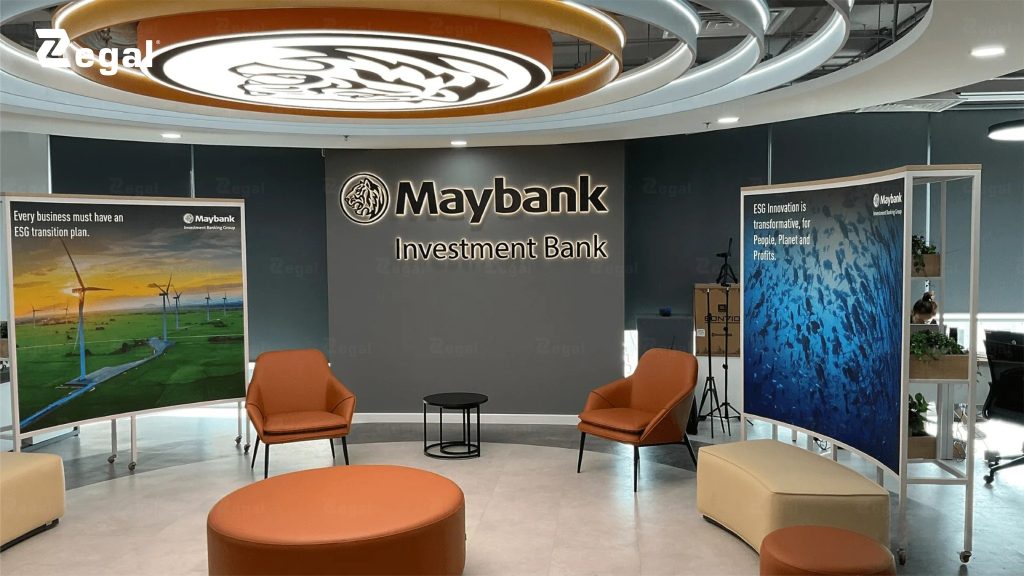


In many households, the bathroom is no longer a purely functional space. It has become a compact spa where people unwind and release the tension of a long day. To transform the bathroom into a truly restorative environment, beyond fixtures and amenities, one element plays a decisive role: bathroom lighting.
A well considered and intelligent lighting system ensures safety while also reshaping the atmosphere. It can turn the bathroom from a cold and humid area into a warm, refined, and inspiring space.
1. The role of bathroom lighting: Beyond visibility
Khi nhắc đến chiếu sáng nhà tắm, nhiều người chỉ nghĩ đến việc lắp một bóng đèn để nhìn thấy. Tuy nhiên, trong thiết kế hiện đại, vai trò của ánh sáng đã vượt xa điều đó:
- Ensuring safety: The bathroom is a wet and potentially slippery environment. Adequate and well positioned lighting is essential for safe movement and for reducing the risk of slips or falls. Focused illumination around mirrors, bathtubs, and shower areas is particularly important.
- Supporting key functions: Activities such as shaving, applying makeup, or skincare require clear, accurate lighting without harsh shadows. Proper lighting allows these tasks to be carried out with precision and comfort.
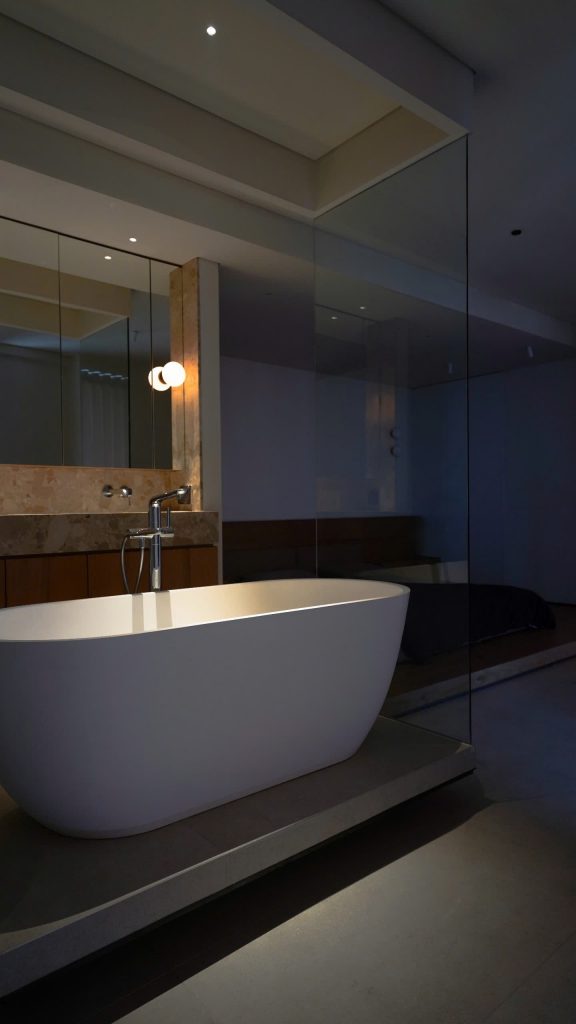
- Creating a relaxing atmosphere: Light has the ability to shape emotions. An adjustable lighting system allows the space to shift from an alert and energetic state in the morning to a calm and soothing mood in the evening. Imagine soaking in a bathtub under warm golden light, where tension gradually fades away.
- Enhancing aesthetics and style: Well designed bathroom lighting highlights architectural details, finishing materials, and premium fixtures. It functions as a powerful decorative element that reflects the homeowner’s aesthetic sensibility and personal character.
2. Key factors to consider when designing bathroom lighting
To achieve an effective and safe bathroom lighting system, several fundamental principles should be observed:
2.1 Basic lighting layers: Layered lighting, diversified functions
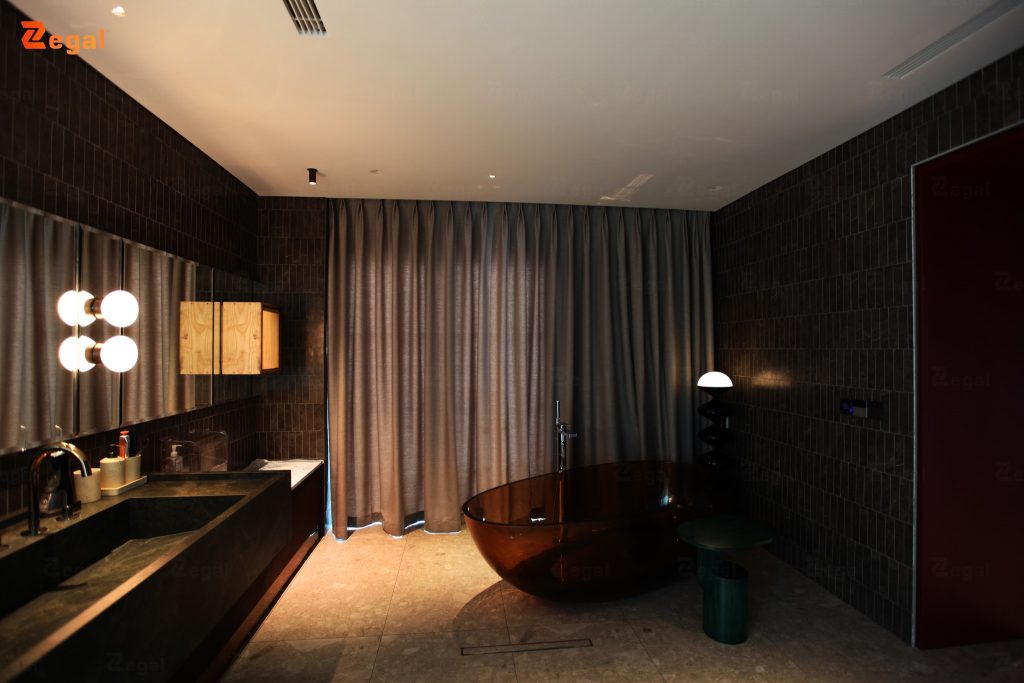
A perfect lighting system does not rely on a single light source. Similar to other spaces, the bathroom also requires a combination of three lighting layers:
- Ambient lighting: This is the primary light source that provides general illumination for the entire space. Recessed lights, surface mounted ceiling lights, or translucent ceilings are common choices, ensuring safe movement and clear visibility throughout the room.
- Task lighting: This layer is extremely important, especially around the mirror area. Task lighting should be positioned to illuminate the face directly from both sides or from above, avoiding shadows under the chin, eyes, or nose during shaving or makeup application. LED mirror backlighting or wall lights installed on both sides of the mirror are effective solutions.
- Accent lighting: This layer is used to highlight architectural details, decorative elements, or a specific wall surface. LED strip lights concealed in ceiling recesses, floor recessed lights near the bathtub, or accent spotlights add depth and refinement to the space.
2.1 Color temperature: Tone as an emotional driver
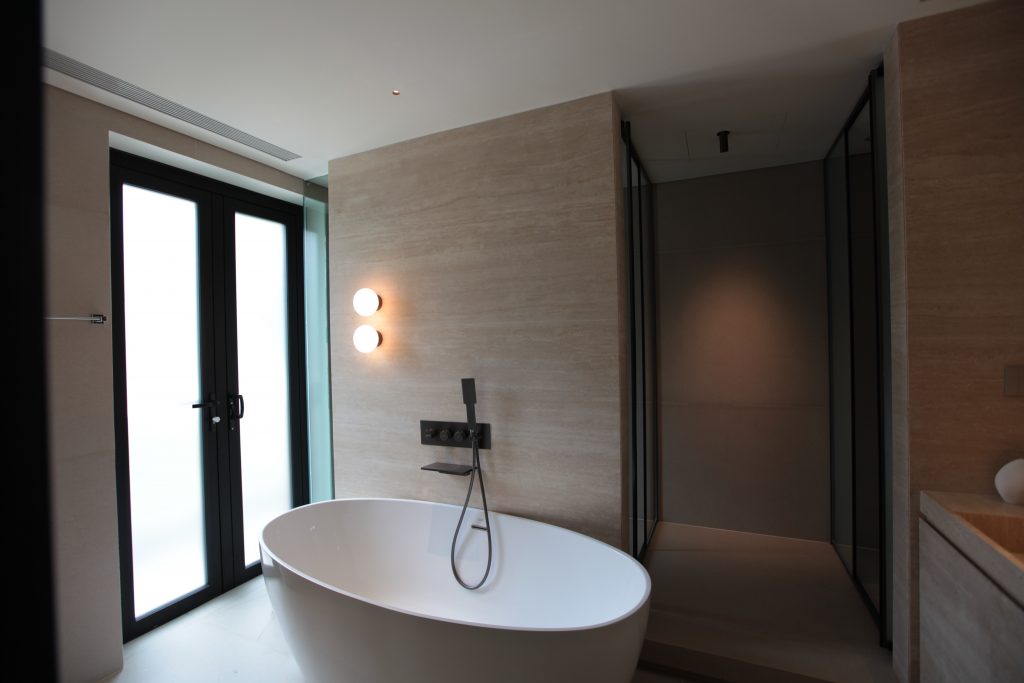
Color temperature has a significant influence on how you perceive the space:
- Warm white light (Warm White 2700K 3000K): Creates a relaxing, warm, and refined atmosphere. It is especially suitable for bathtub areas, delivering a spa like experience.
- Neutral white light (Neutral White 3500K 4500K): Reproduces daylight in a more accurate and natural manner. This is an ideal choice for makeup and shaving areas, allowing skin tones and details to be seen clearly and precisely.
Both lighting tones can be combined within the bathroom by using neutral white light at the mirror area and warm white light around the bathtub, or by selecting fixtures with adjustable color temperature for greater flexibility.
2.3 Ingress protection rating (IP rating): A critical safety factor
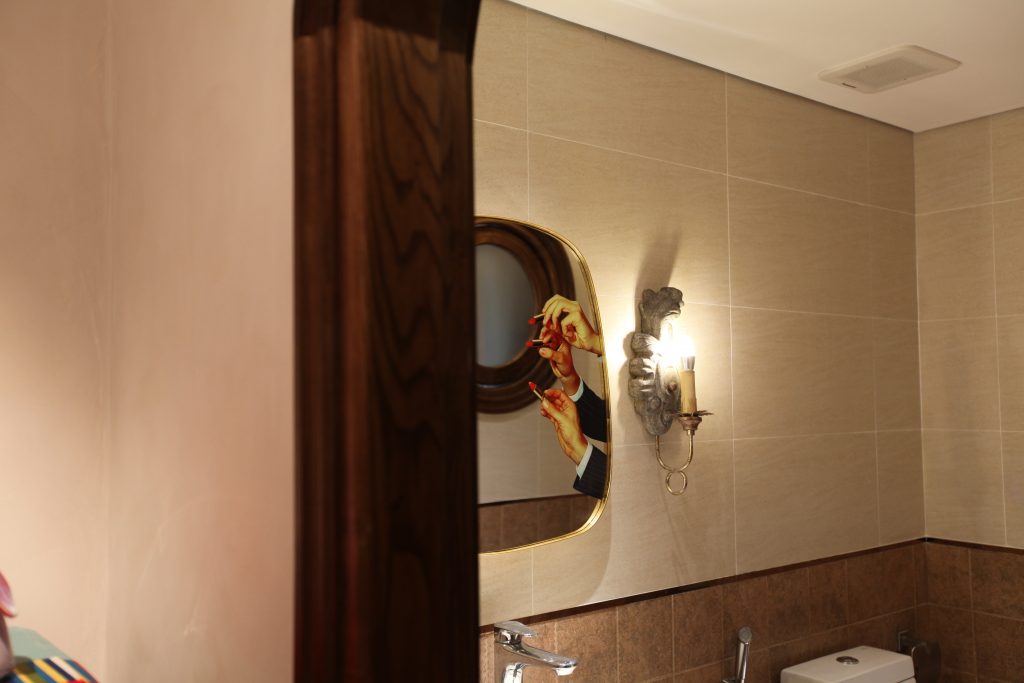
The bathroom is a humid environment. Therefore, the ingress protection rating of lighting fixtures is a safety factor that must not be overlooked. Lighting products should be selected with an IP rating appropriate to each specific area within the bathroom.
- Zone 1 (Inside the bathtub or shower area): A minimum IP rating of IP67 is required.
- Zone 2 (Areas adjacent to the bathtub, shower, or washbasin): A minimum IP rating of IP44 is required.
- Zone 3 (Areas outside the zones above): Fixtures with a lower IP rating may be used, with IP20 as the minimum requirement.
2.4 Light adjustability: Flexibility and convenience
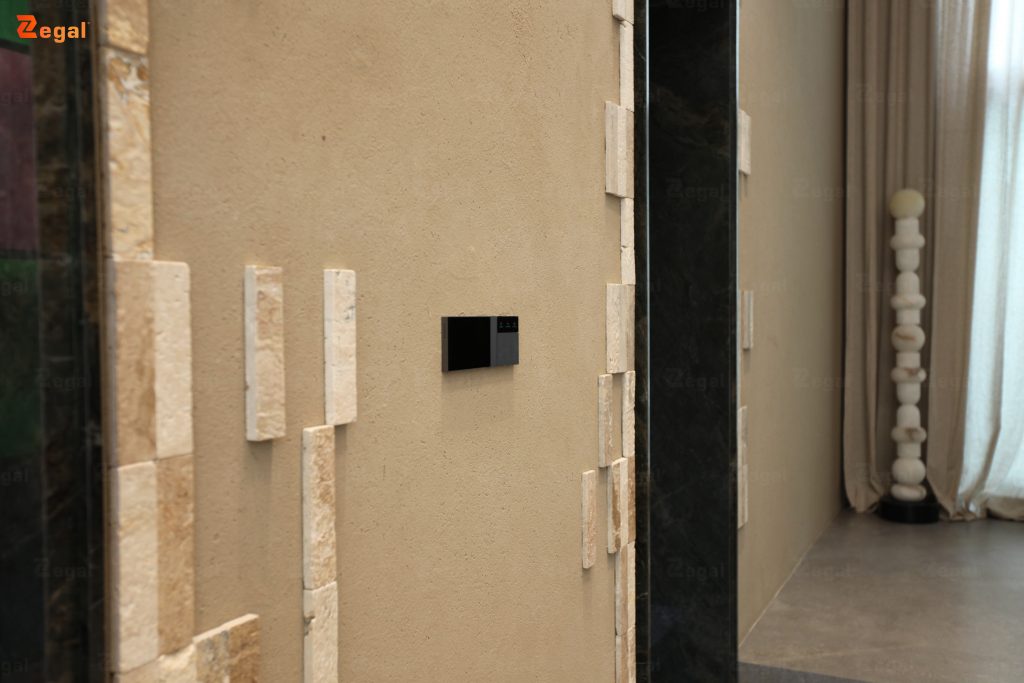
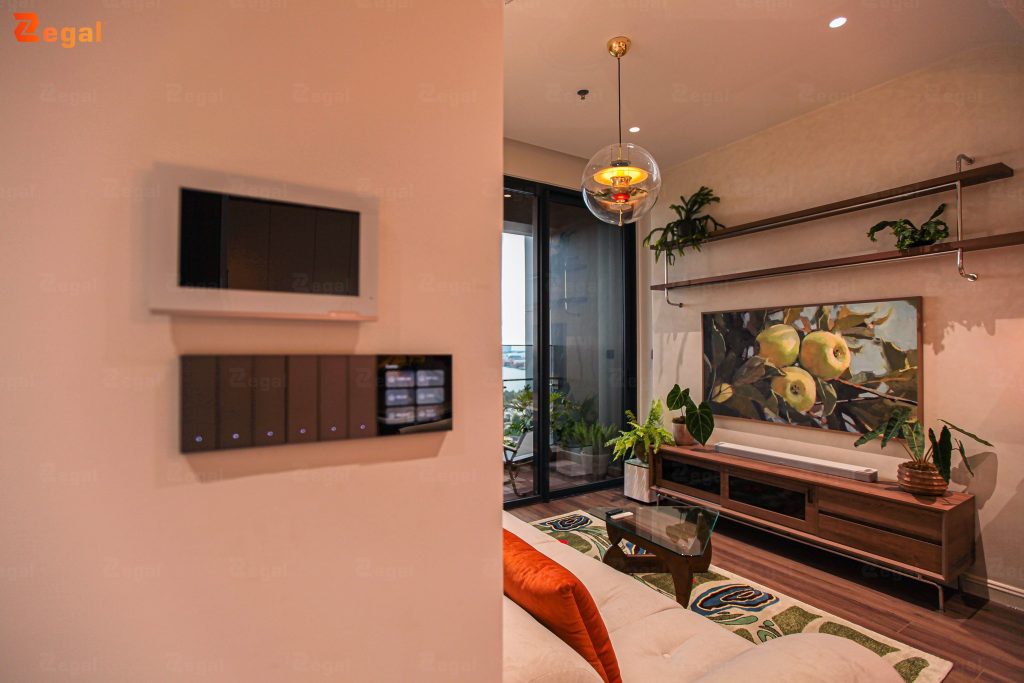
A modern bathroom lighting system should allow adjustment of both brightness and color temperature. Dimmers or smart control systems make it easy to change the bathroom atmosphere, from bright light for cleaning to softer lighting for a relaxing evening.
3. Modern and distinctive bathroom lighting trends
The design world is constantly evolving, and bathroom lighting follows this progression. Below are current ideas that are widely favored, offering a balanced combination of function and aesthetics:
3.1 Concealed and wall washing lighting:
Concealed and wall washing lighting focuses on creating illumination without exposing the light source directly.
This approach emphasizes indirect light to achieve a refined and elegant appearance. LED strip lights are concealed within ceiling recesses, beneath mirror cabinets, or directed onto feature walls, creating a soft and diffused glow that makes the space appear wider and taller.
3.2 LED integrated mirrors:
This is a highly favored solution for both function and aesthetics. Mirrors with LED backlighting or integrated LED strips provide sufficient illumination for makeup and shaving, while also serving as a modern decorative element that enhances the overall bathroom design.
3.3 Decorative pendant lighting: An artistic focal point:
A pendant light with a distinctive design can become the visual center of the space.
For bathrooms with generous floor area or high ceilings, a pendant light with a unique design can act as a focal point. When positioned above the bathtub area or at the center of the room, pendant lighting introduces a sense of luxury, individuality, and visual impact.
3.4 Floor recessed lighting: Added depth and safety:
Floor recessed lights, typically installed along circulation paths or around the bathtub, support safe movement at night while creating a distinctive lighting effect that adds depth and a subtle sense of atmosphere to the space.
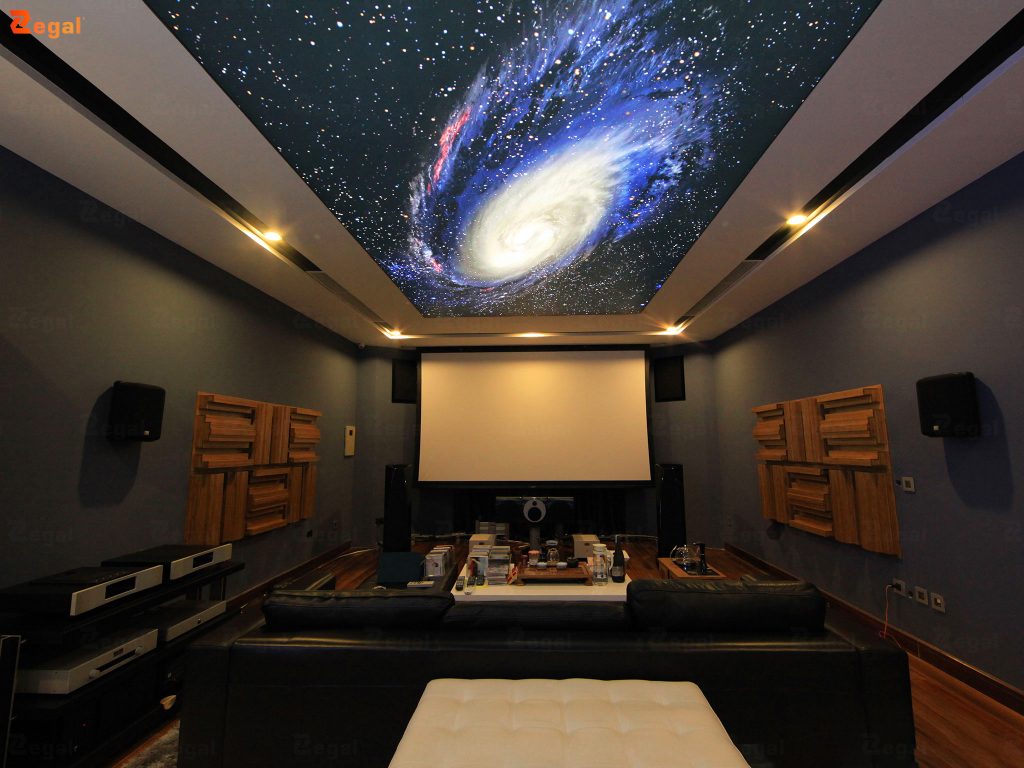
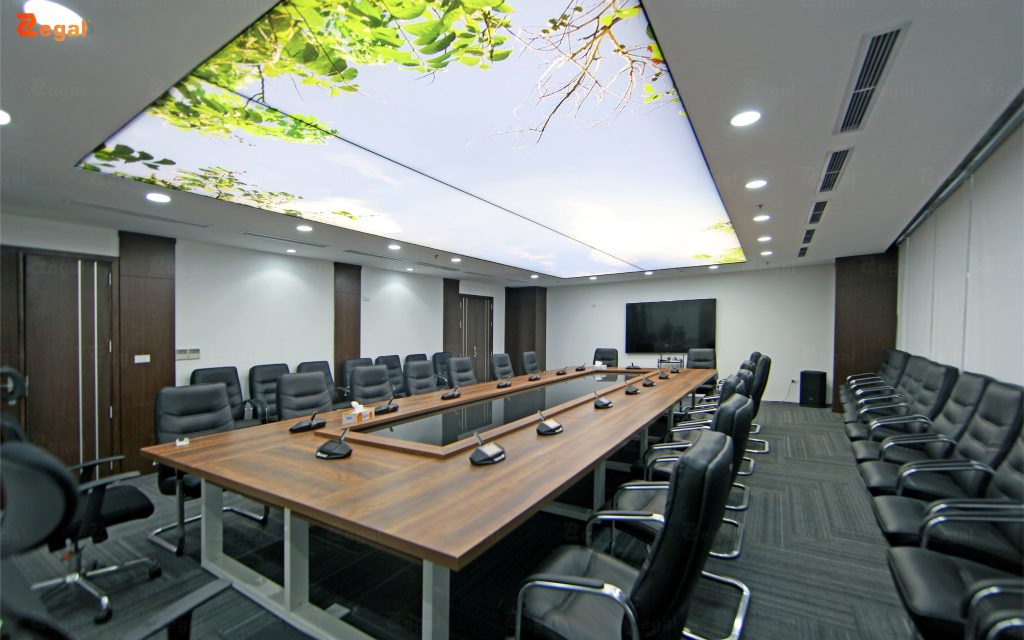
3.5 Translucent ceilings: Expanding space and enhancing brightness:
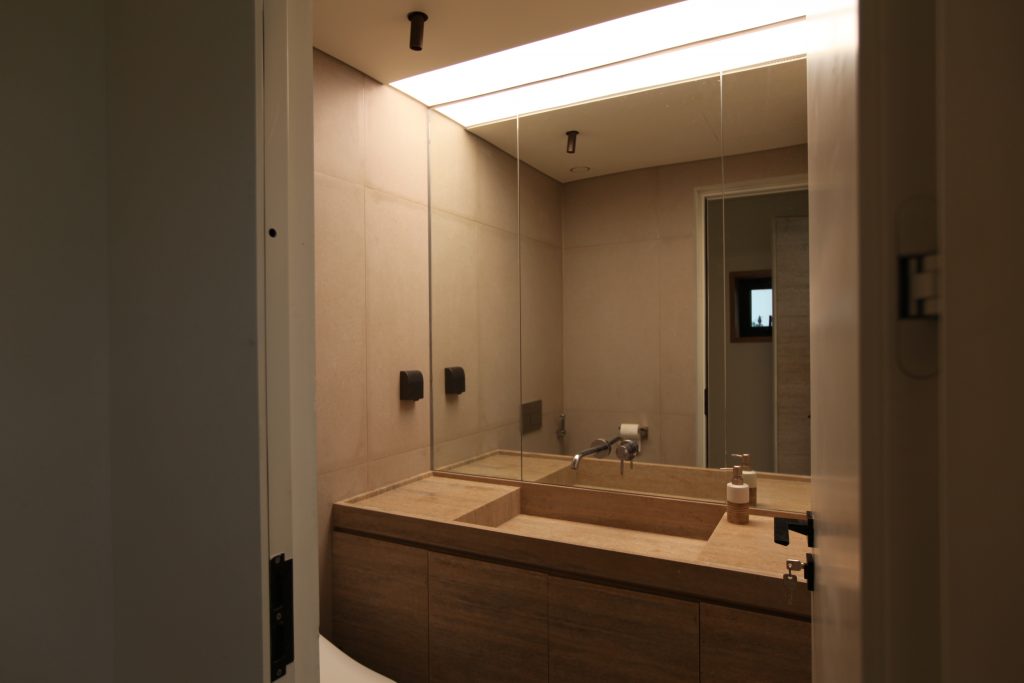
This breakthrough solution transforms the entire ceiling into a large luminous surface, delivering exceptionally uniform and soft general illumination.
- Open space effect: Translucent ceilings create the perception of a higher ceiling and a more spacious environment, which is particularly beneficial for smaller bathrooms.
- Spa like lighting atmosphere: Evenly diffused light without shadows creates a calm and relaxing ambiance similar to that of a high end spa.
- Personalization potential: A pure white translucent ceiling can be selected for a clean and contemporary look, or custom printed imagery such as sky or clouds can be applied to bring a sense of nature into the bathroom.
4. Conclusion
Bathroom lighting is no longer a secondary element. It has become a core component of modern interior design. A well considered lighting system ensures safety and comfort while transforming the bathroom into a space for relaxation, energy recovery, and personal expression.
Explore new lighting trends with confidence, combine lighting layers intelligently, and select solutions that best suit your needs to turn the bathroom into a true sanctuary. A meaningful day often begins and ends here, and bathroom lighting is the first element that sets that experience in motion.
——
For further consultation, please contact Zegal Vietnam using the information below:
Zegal Hanoi
112 Vo Chi Cong, Nghia Do Ward, Hanoi
Zegal Ho Chi Minh
319–C9 Ly Thuong Kiet, Phu Tho Ward, Ho Chi Minh City
Hotline: +84969 14 6688