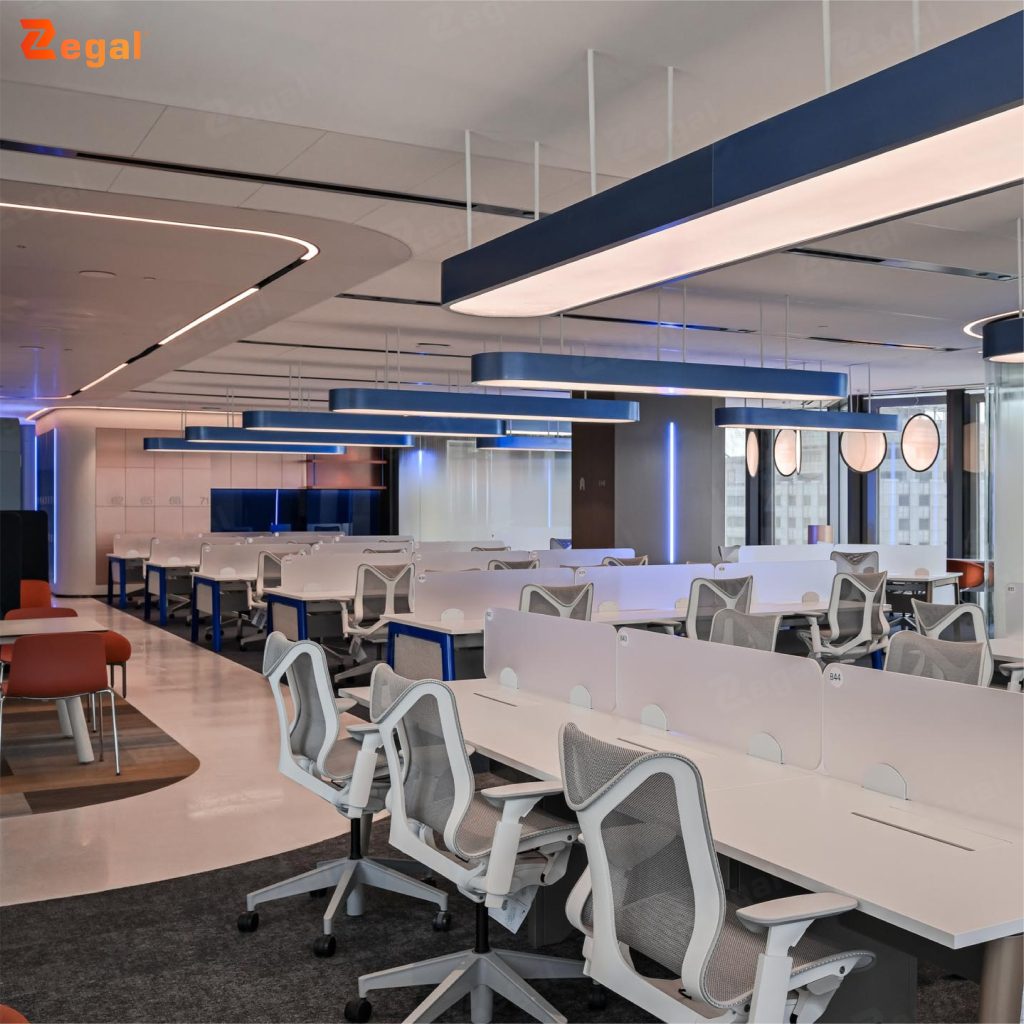


In modern residential design, the ceiling is no longer merely a structural covering; it has evolved into a key element that shapes both the aesthetic and the spatial experience. Beyond traditional options like gypsum, wood, or concrete, the “translucent ceiling” (or light-diffusing ceiling) has gained significant interest among homeowners and architects for its ability to integrate lighting with architectural decoration.
But is a translucent ceiling the right choice for your home? Is this solution truly suitable for every space? What are the installation costs, and what should you keep in mind to ensure long-term performance? Let’s explore 5 essential points with Zegal before you make your decision.
1. What is a translucent ceiling, and why is it used in residential spaces?
A translucent ceiling is a ceiling system that utilizes materials capable of transmitting and diffusing light, combined with an LED lighting system positioned above the surface. When the lighting is activated, the entire ceiling or specific sections of it glows uniformly, creating an effect similar to having a large, integrated light source overhead.

Unlike traditional lighting methods such as downlights, chandeliers, or surface-mounted ceiling lights a translucent ceiling system transforms the ceiling surface itself into an architectural light source.
Depending on the design, homeowners can choose from various finishes, including:
White translucent ceilings: Create a soft, modern lighting effect, ideal for living rooms, bedrooms, and hallways.
Printed translucent ceilings: Allow for the display of imagery such as the sky, clouds, nature scenes, or custom graphic designs.
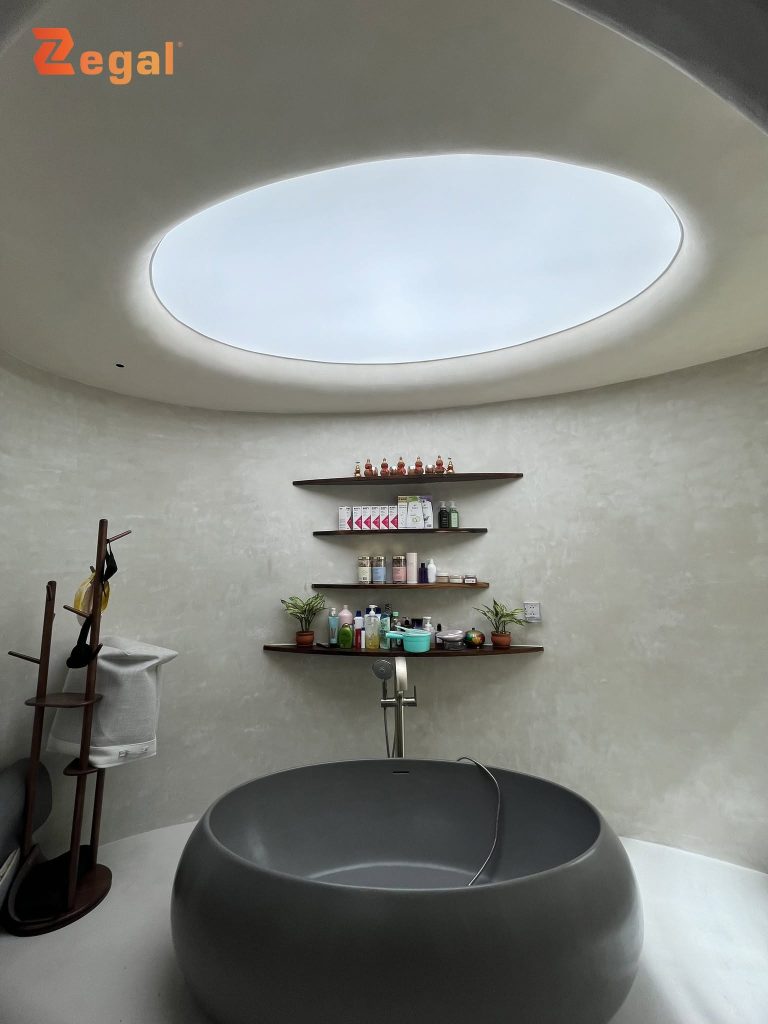
Curved translucent ceilings: Feature soft, flowing curves, perfectly suited for spaces with a modern design language.
Translucent ceilings with integrated smart lighting: Enable adjustments to brightness and color temperature, allowing the atmosphere to be tailored to the specific moment or use.
Thanks to this versatility, translucent ceilings go beyond mere illumination, expanding the creative possibilities for residential interior design.
2. Should you install a translucent ceiling in your home?
The answer is yes if you are looking for a solution that provides both illumination and an architectural focal point, all while fitting within your investment budget.
Translucent ceilings are particularly well-suited for homes with modern, minimalist, or contemporary styles, as well as any space where a unique lighting effect is desired.
Key advantages of translucent ceilings
Creates a diffused light source, minimizing glare
Light from an LED system is diffused through the translucent material, resulting in a broad, relatively uniform illuminated area. This prevents the sensation of light being concentrated at a single point—a common issue when using certain types of direct-lighting fixtures.
This is a significant benefit for living rooms, common areas, or any space that requires a soft, ambient glow. Enhancing Aesthetic Appeal
Translucent ceilings can serve as a striking focal point in interior design. Whether featuring a minimalist, flat surface, curved forms, printed patterns, or a sky-like effect, each design option can lend a unique character to a home.
Optimizing Lighting Design
When paired with an appropriate LED system, translucent ceilings allow for adjustments in both light intensity and color temperature. Homeowners can opt for warm white light for moments of relaxation or neutral-toned light for everyday activities.
Design and Application Flexibility
Translucent ceilings can be installed in a wide variety of shapes, sizes, and heights. This solution can also be integrated with gypsum ceilings, decorative fixtures, cove lighting, or smart lighting systems.
Considerations and Limitations
Beyond their advantages, there are several factors to weigh before installing a translucent ceiling:
The initial investment is generally higher than that of conventional ceiling finishes, as it encompasses the translucent material, mounting frames, and the LED system.
A technical plenum (space) is required above the ceiling surface to house the lighting components and ensure proper light diffusion.
The quality of the illumination depends heavily on the LED layout and the distance between the light sources and the translucent membrane.
Maintenance, repairs, or component replacements require an access strategy tailored to the specific ceiling system’s construction.
Consequently, it is not necessary to install translucent ceilings throughout the entire home. Homeowners may choose to apply them selectively in areas where a focal point is desired or where specific lighting requirements exist.
3. Five Things to Know Before Installing a Translucent Ceiling in Your Home
3.1. Ceiling Height and Spatial Area
This is one of the first factors to consider. A translucent ceiling system requires a gap above it to accommodate the installation frame and the LED lighting setup. If not calculated properly, the installation could reduce the room’s clear ceiling height.
For homes with low ceilings, architects should carefully evaluate the surface area and placement, prioritizing zones that offer sufficient technical clearance. It is not necessary to design an excessively large translucent ceiling section if doing so compromises the overall proportions of the room.
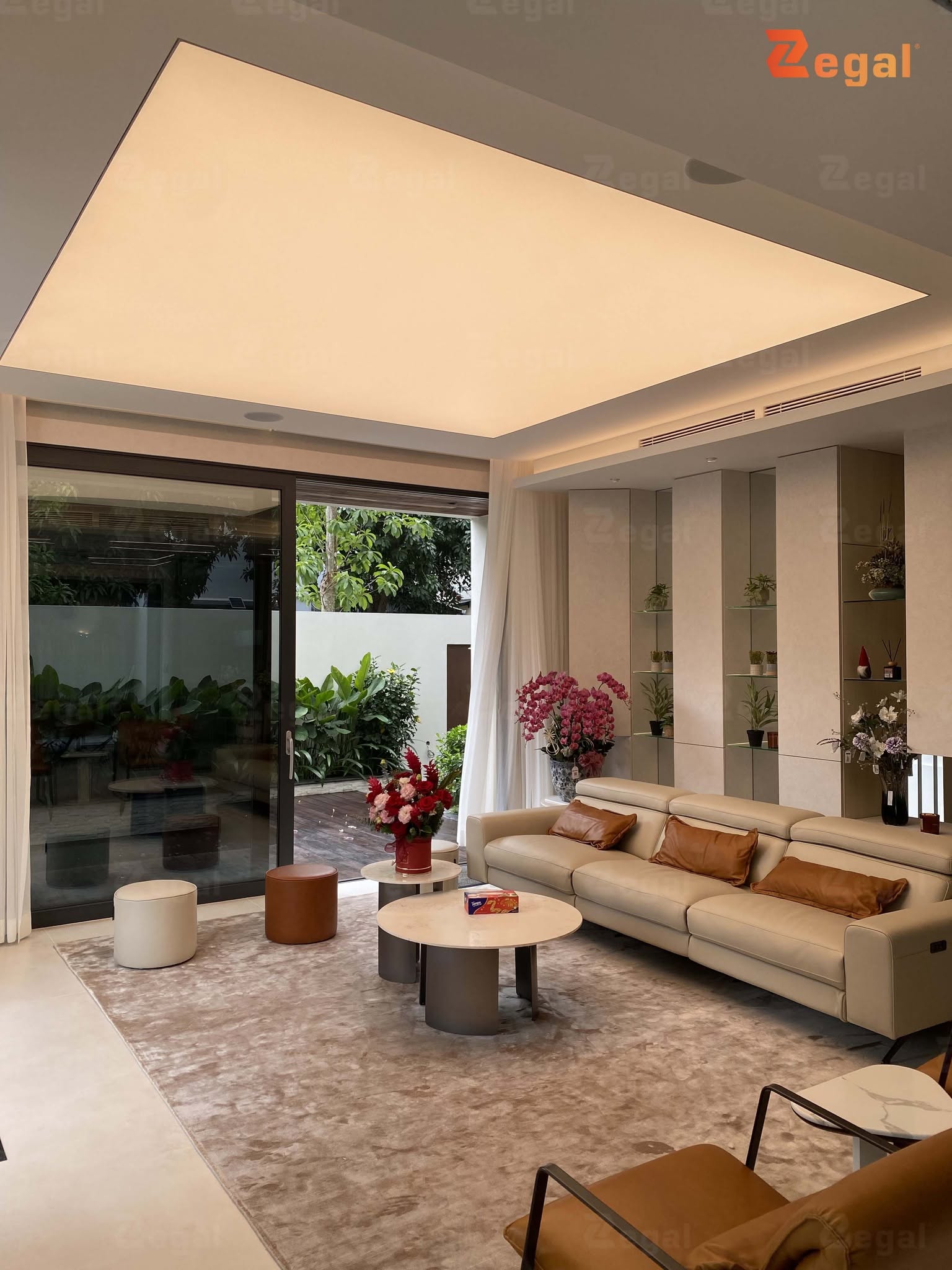
For townhouses or apartments, a common solution is to combine a translucent ceiling with a stepped (recessed/layered) gypsum ceiling, creating a distinct, illuminated zone.
3.2. Quality of Translucent Materials
The material is a key factor directly influencing light transmission, surface uniformity, and the overall aesthetic of the ceiling system.
Key criteria to consider include:
- Light transmission and diffusion capabilities.
- Surface uniformity when illuminated.
- Retention of color and shape over time.
- Ease of cleaning, maintenance, and removal/reinstallation when necessary.
- Compatibility with the chosen framing system and light source.
For residential projects that demand a high level of aesthetic appeal, it is advisable to prioritize materials with clear origins and appropriate technical specifications, sourced from providers with proven installation experience.
3.3. The LED System Determines Light Quality
A high-quality translucent ceiling depends not only on the material itself but also on the design of the lighting system installed behind it.
If the spacing between LED strips is not properly calculated, the light source may create uneven bright and dark patches, or the individual LED points might become visible on the ceiling surface.
To prevent this, the following factors must be calculated in coordination:
- Type of LED and power output.
- Spacing between LED strips.
- Distance from the LEDs to the translucent material surface.
- Light-diffusing properties of the material.
- Power supply and system control methods.
Additionally, homeowners may consider an LED system with adjustable color temperature (CCT)—typically ranging from 2700K to 6500K, depending on the equipment—allowing for flexible adjustments to the lighting tone to suit different living needs.
3.4. Selecting the Right Design for Each Area
Not every space in a home requires the same type of stretch ceiling. The choice of shape, size, and light intensity should be based on the specific function of each area.
Living room: A luminous (translucent) ceiling can serve as a focal point in the central area, combined with decorative fixtures or indirect (cove) lighting to create multiple layers of illumination.
Bedroom: Soft, dimmable lighting with a warm color temperature is recommended to foster a relaxing atmosphere.
Kitchen and dining area: A luminous ceiling can be installed as an illuminated panel above the dining table or common living space, complemented by functional task lighting where focused illumination is required.
Hallways and corridors: Elongated strips of luminous ceiling can be used to create a guiding effect while enhancing brightness in transitional spaces.
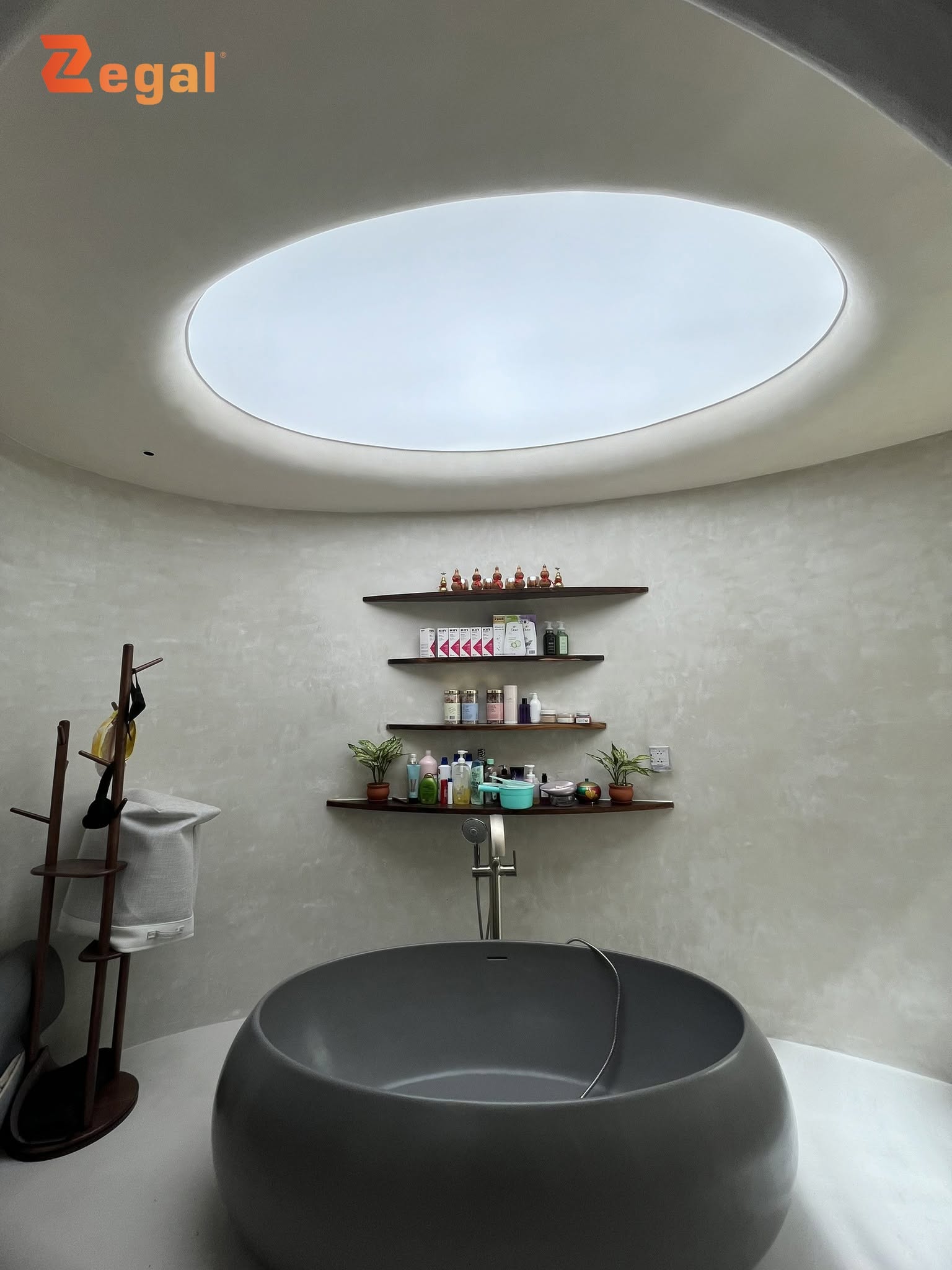
Bathroom: Luminous ceilings can be applied in bathrooms to provide diffused light, creating a clean and airy feel. Homeowners may opt for a flat design or incorporate imagery—such as a sky motif—to enhance the sense of relaxation. However, it is essential to select materials and lighting systems specifically designed for high-humidity environments, ensuring moisture resistance and ease of maintenance.
Choosing the right placement ensures the ceiling system remains effective without making the space feel overly cluttered or complex.
3.5. Installation Costs and Maintenance
There is no fixed price for luminous ceilings; the total budget depends on the surface area, the type of materials used, the complexity of the shape, the LED system, and the specific lighting control requirements. A flat ceiling with monochromatic white light is generally simpler in construction than a curved ceiling, one featuring printed patterns, or a system integrated with RGB/RGBW controls.
Beyond the initial installation costs, homeowners should also consider long-term maintenance requirements. The support framework must be designed to allow for easy access, inspection, and replacement of LED components whenever necessary.
This is a crucial factor in minimizing additional costs and ensuring consistent lighting quality throughout the system’s lifespan.
4. Where should a stretch ceiling (translucent ceiling) be installed in a home?
To optimize both costs and utility, homeowners should prioritize areas where a stretch ceiling provides genuine functional or aesthetic value.
Stretch ceilings in the living room
The living room is typically a large space that serves as a hub for daily activities and hosting guests. A well-designed stretch ceiling can act as a central focal point, making the space feel more open and adding a sense of depth.
Stretch ceilings in the bedroom
In a bedroom, a stretch ceiling can be designed as smaller panels or integrated as illuminated borders. When combined with controls for brightness and color temperature, the space can be flexibly adjusted to suit different activities—from active daily use to rest and relaxation.
Stretch ceilings in stairwell areas
Stairwells connect different floors and often feature unique architectural voids. Installing a stretch ceiling within a stairwell shaft or on a landing can enhance illumination and create a striking visual feature along the vertical axis.
Stretch ceilings simulating a skylight
For townhouses or apartments that lack natural light, a stretch ceiling can be designed to mimic the effect of a skylight. By incorporating imagery of the sky, clouds, or natural-toned lighting, this solution creates an open, airy atmosphere, effectively countering the monotony of spaces with limited access to natural daylight. It should be noted that a translucent ceiling designed to simulate a skylight is an artificial lighting solution; it cannot fully replicate the functions of natural ventilation, air exchange, or actual sunlight.
5. Zegal – Translucent Ceiling Solutions for Modern Living Spaces
With a technical team boasting over 14 years of experience, Zegal provides translucent ceiling solutions integrated with LED lighting systems for a wide range of projects—from private residences and luxury apartments to hotels, offices, and commercial spaces.
As the exclusive authorized partner of Barrisol in Vietnam, Zegal offers solutions featuring translucent ceiling membranes imported from France, combined with LED systems precisely engineered to suit the specific design requirements of each project.
Depending on your specific needs, Zegal provides consultation on design and installation, taking into account:
- The actual dimensions and height of the space.
- Ceiling configurations, such as flat, tiered, or curved designs.
- The choice of translucent materials and desired finish effects.
- LED systems, including single-color, adjustable color temperature, or multi-color (RGB) options.
- Control mechanisms and long-term maintenance requirements.
Beyond mere aesthetics, Zegal focuses on the seamless integration of materials, lighting systems, and technical construction—ensuring that the translucent ceiling is not only visually striking but also durable and functional for long-term use.
For further consultation, please contact Zegal Vietnam using the information below:
Zegal Hanoi
112 Vo Chi Cong, Tay Ho District, Hanoi
Zegal Ho Chi Minh City
319 – C9 Ly Thuong Kiet, Phu Tho Ward, Ho Chi Minh City
Hotline: 0969 14 6688