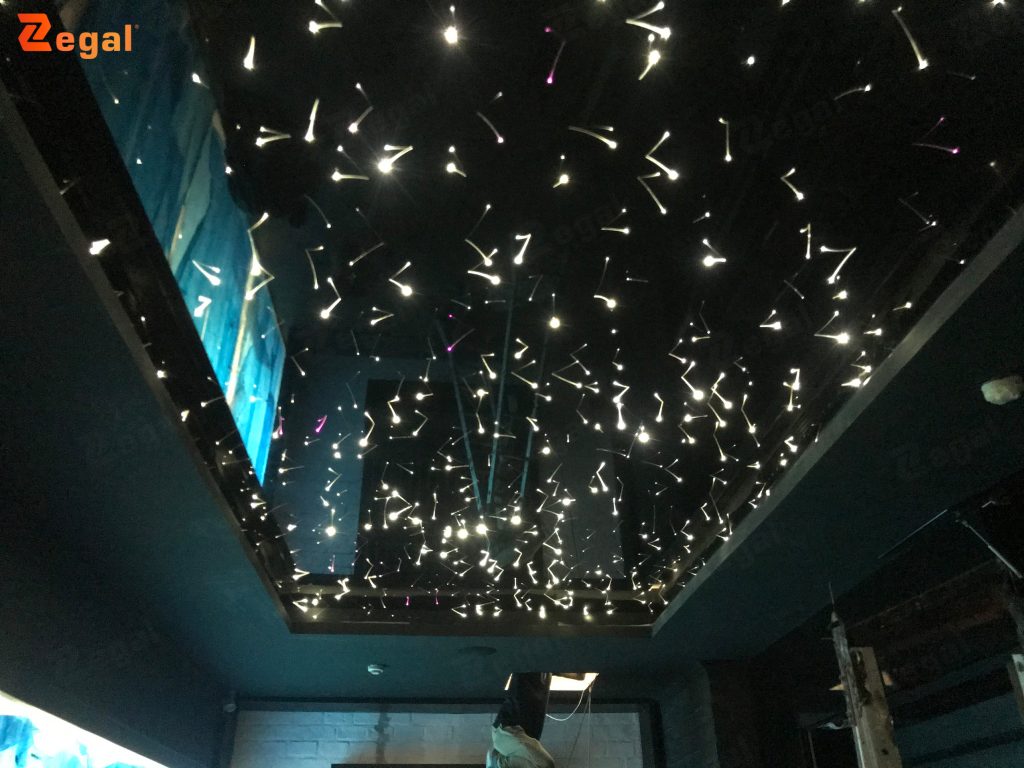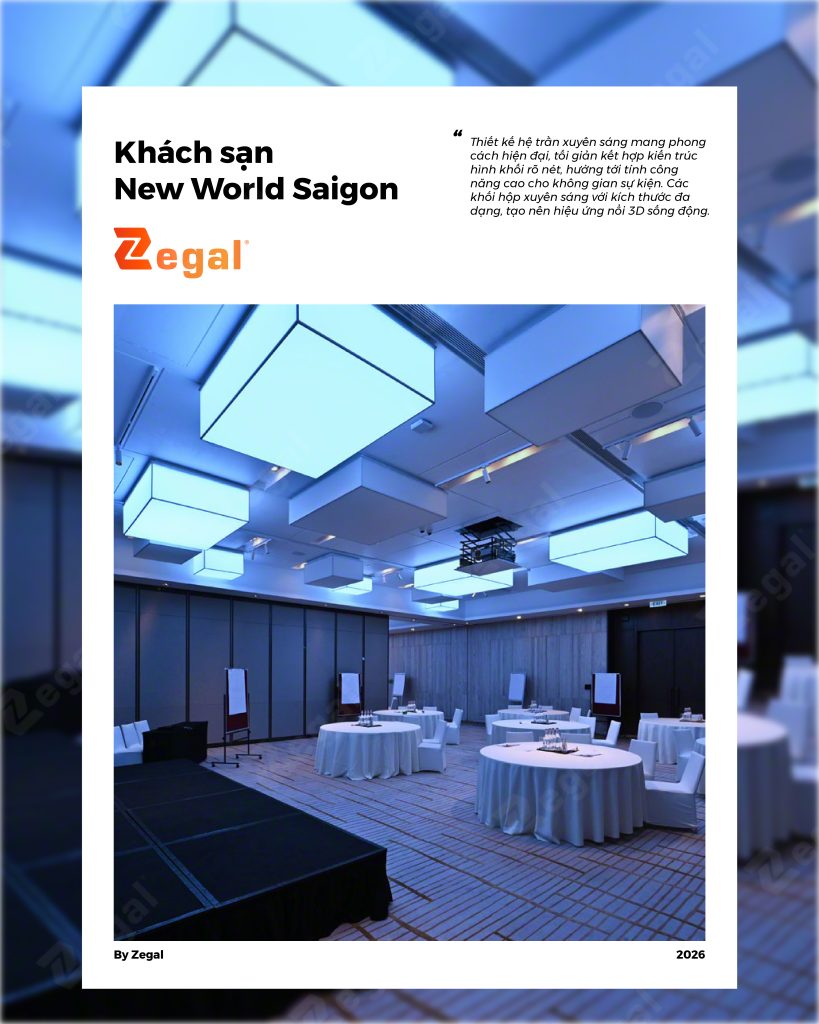


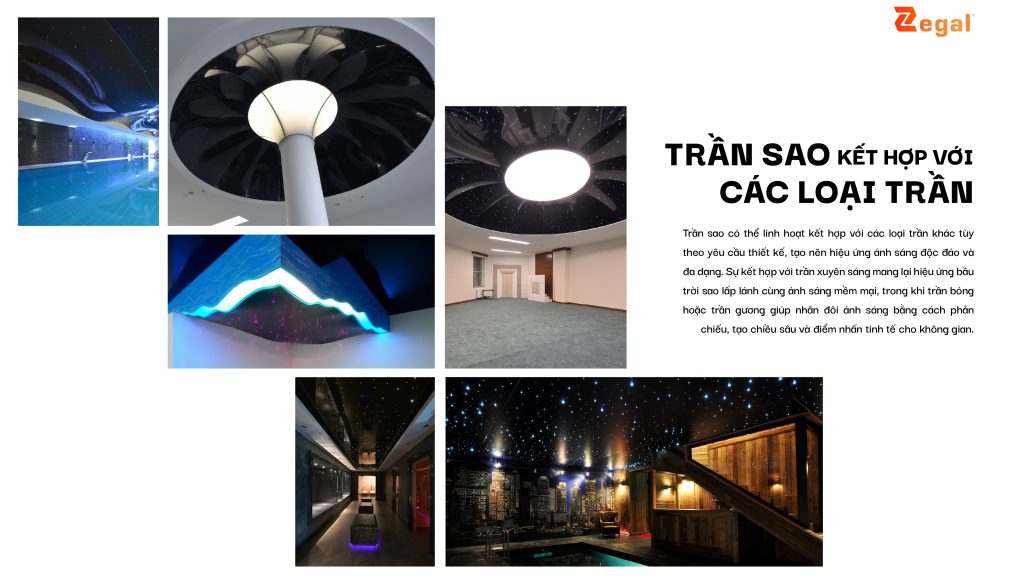
A Fiber-Optic Star Ceiling is a decorative ceiling solution that creates the effect of a starry sky using a system of optical fibers and a light source. Each optical fiber channels light to a specific point on the ceiling surface. This combination allows the ceiling to produce effects such as twinkling, flickering, or color-changing. It is for this reason that such ceiling systems are frequently used in spaces requiring distinctive lighting accents.
So, what components make up a starry sky ceiling? How do the points of light change color and intensity? Let’s explore the technology behind this in the article below.
1. What is a starry sky ceiling?
A starry sky ceiling is a decorative ceiling system designed to simulate the appearance of a starry sky. Small points of light are arranged across the ceiling surface according to a carefully calculated layout and density.
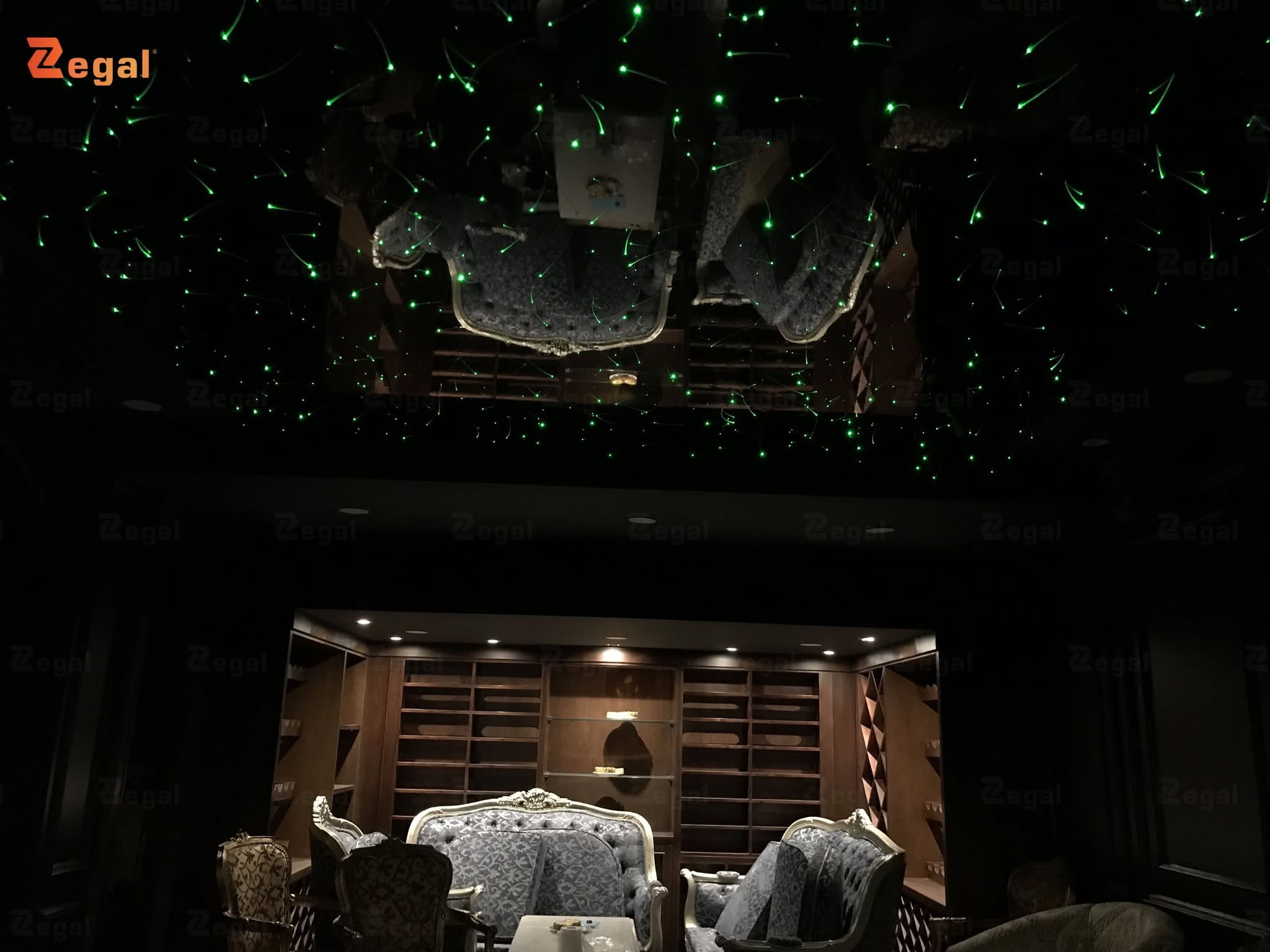
In this setup, optical fibers transmit light from the light source unit to individual points of light. When viewed from below, the fiber tips appear as points of light resembling stars. Depending on the design, the system can produce light points of varying sizes. This arrangement adds depth to the ceiling surface and creates a more natural effect.
2. What constitutes a starlight ceiling?
Creating a starry sky effect requires the synchronized integration of various components, each serving a specific function within the system.
2.1. Optical fibers for creating light points
Optical fibers are a crucial component of the starlight ceiling structure. These slender fibers are routed from the light source unit to specific locations on the ceiling surface. As light travels through the fiber, the tip illuminates, creating a distinct point of light on the ceiling.
Multiple fiber diameters can be used within a single system. This variation in size produces light points of different magnitudes, resulting in a more realistic starry sky effect.
2.2. Light source unit
Optical fibers do not generate light on their own; illumination is provided by a light source unit (or illuminator) positioned appropriately within the system. These units often utilize LED technology, offering a wide range of color options. Systems equipped with RGB or RGBW capabilities allow for programmable color changes.
The power output of the light source unit must be matched to the quantity and total length of the optical fibers—a factor that requires careful calculation during the design phase.
2.3. Controller for effect generation
The controller dictates the operation of the lighting system, allowing for adjustments to color, intensity, and transition speed. It enables the starlight ceiling to produce either static or dynamic lighting effects, with light points programmable to shift through various modes.
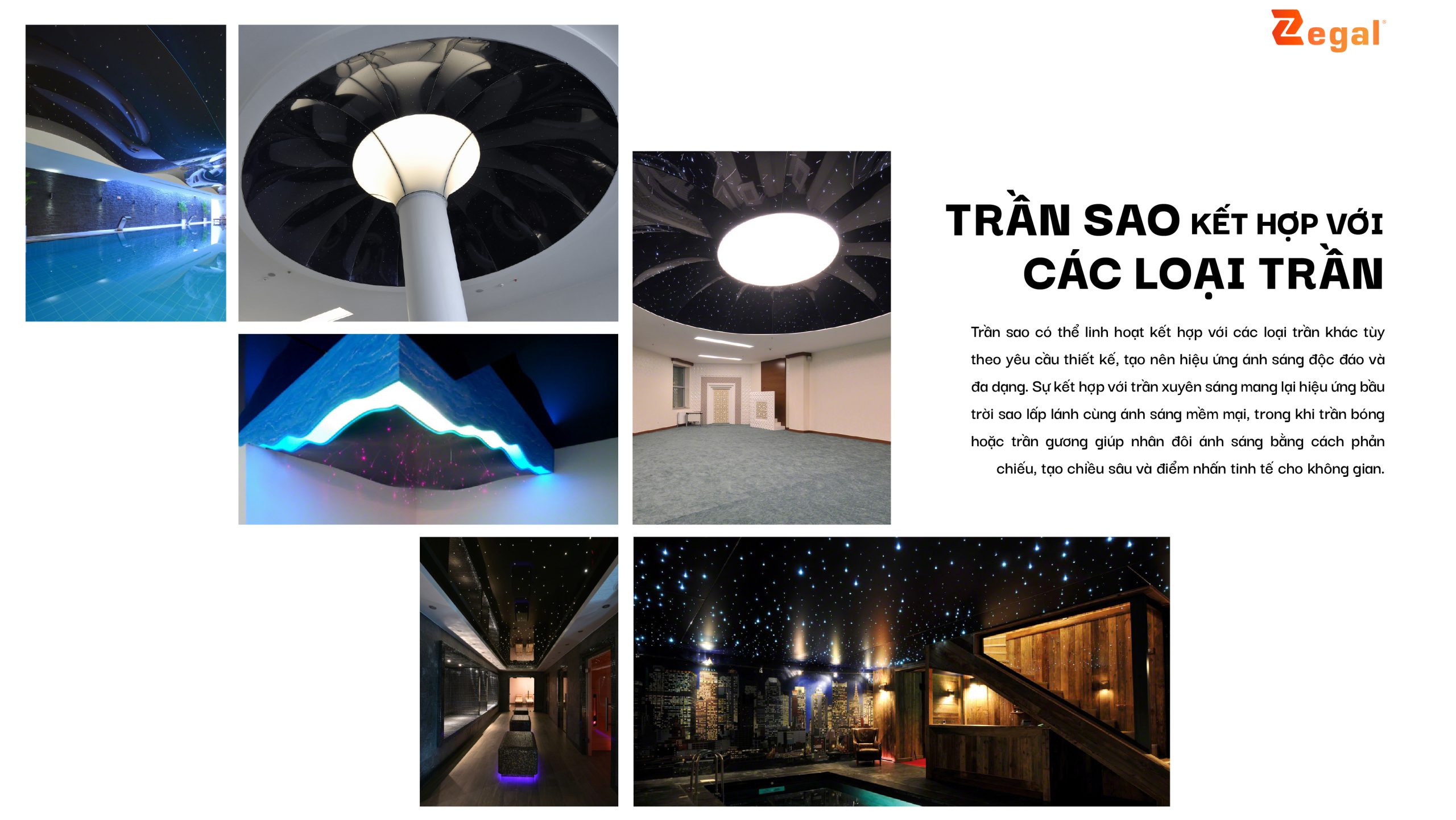
2.4. Glossy panels in the starry ceiling system
A glossy panel is a finishing material used for the surface of a starry ceiling. Its glossy finish enhances light reflection, creating a sense of depth and making the ceiling stand out. When combined with a fiber-optic system, the glossy panel ensures the points of light appear sharp and distinct against the ceiling surface. The light emitted from the fiber tips creates a contrast with the background, effectively simulating a night sky.
Depending on the design, glossy panels can be selected in various colors and reflectivity levels. Choosing the right material ensures the starry ceiling achieves the desired visual effect while harmonizing with the overall interior design.
3. Why does the starry ceiling sparkle?
The sparkling effect is created by variations in the light intensity of the individual light points. The control system can be programmed to adjust the timing of brightness increases and decreases. As the intensity of some light points fades, others brighten; this non-simultaneous fluctuation creates the impression of twinkling stars.
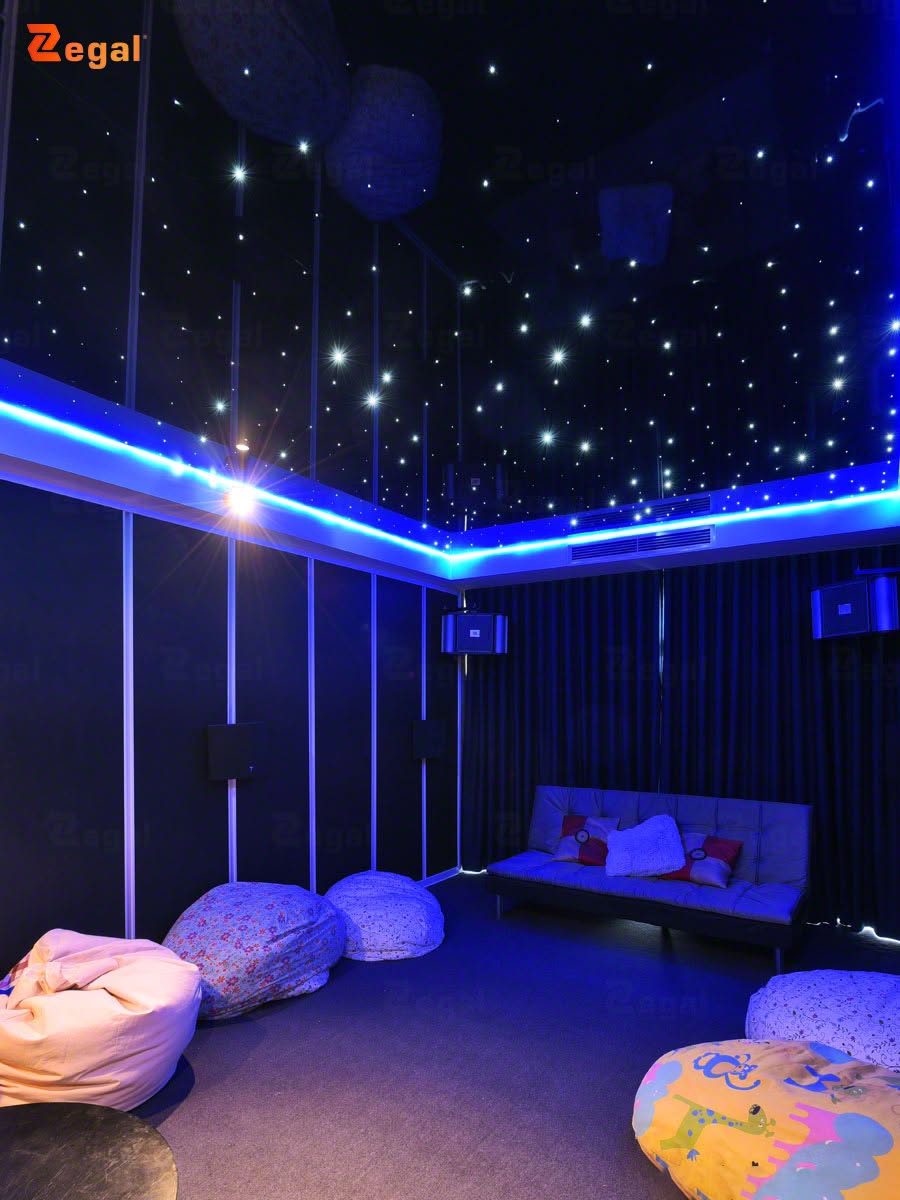
This effect can be adjusted based on the intended use. Relaxation spaces are typically best suited to gentle, slow-moving light patterns.
4. How is the twinkling effect created?
The controller can program light and dark cycles for the system. Individual groups of optical fibers can vary in intensity at different intervals. As the points of light shift continuously, the human eye perceives movement across the entire surface, bringing the starry ceiling to life.
The twinkling speed must be carefully controlled; an effect that is too rapid can diminish the space’s relaxing atmosphere.
5. Why can Fiber-Optic Star Ceiling change color?
Color-changing capabilities depend on the light source and the controller. RGB or RGBW light engines can generate a wide range of colors by blending light channels. Colored light is transmitted through the fiber optic system to each individual point of light; as the light source changes, the color at the fiber tip shifts accordingly.
Therefore, the color change does not originate from the optical fibers themselves; the fibers primarily serve to transmit the light.
6. Zegal’s starry ceiling solutions
Zegal implements starry ceiling solutions tailored to specific requirements regarding surface area, light point density, and lighting effects. Each plan is developed based on the unique characteristics of the project site. The system can incorporate fibers of various sizes, with light engines and controllers selected to match the desired ambiance.
Zegal manages the entire process, from site assessment to design and installation, delivering solutions that ensure stable lighting, harmonious layouts, and ease of maintenance.
7. Conclusion
Starry ceilings create a celestial effect through the combination of optical fibers, light engines, and control systems. The fibers transmit the light, while the light engine determines the color. The twinkling effect is achieved by programmatically varying the light intensity. Color-changing capabilities depend on the light source technology and the control system.
When properly designed, fiber optic star ceilings create striking lighting accents for a wide range of spaces.
——
For further consultation, please contact Zegal Vietnam using the details below:
Zegal Hanoi
112 Vo Chi Cong, Nghia Do Ward, Hanoi
Zegal Ho Chi Minh City
319 – C9 Ly Thuong Kiet, Phu Tho Ward, Ho Chi Minh City
Hotline: 0969 14 6688